
Quick Summary
- Exodus just announced it’s no longer just a crypto wallet — it’s building a full self-custody money app called Exodus Pay, live now in all 50 U.S. states
- You can spend Bitcoin and stablecoins anywhere Visa or Apple Pay is accepted, while keeping your private keys on your own device
- Exodus signed a multi-year UFC sponsorship deal as the official payments partner, going live June 1
- The company fought through a brutal NYSE listing saga in 2024—regulators pulled the listing at the last minute—and finally went public in January 2025
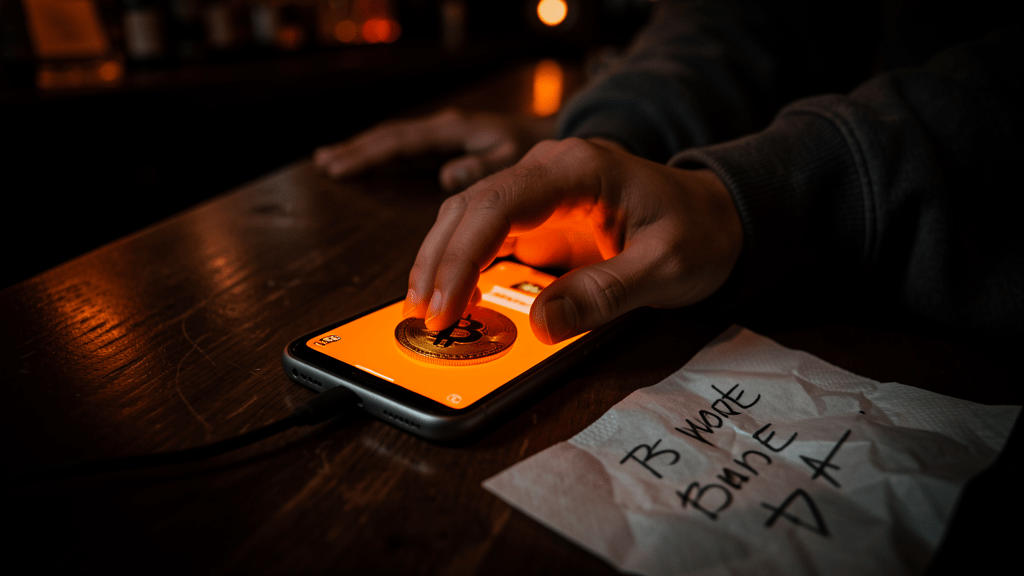
- CEO JP Richardson’s core argument: if normal people can’t use self-custody without a napkin and a 12-word panic attack, the industry has failed
What Happened
At its hometown summit in Omaha on May 1, 2026, Exodus Movement (NYSE American: EXOD) made a big announcement: it’s done being called a wallet company. The new pitch is "one app for money" — a single place where you hold your keys, spend Bitcoin, send money to friends, and connect to card networks, all without Exodus ever touching your funds.
The centerpiece is Exodus Pay, a self-custody payments system now available in all 50 U.S. states. You fund it with Apple Pay, a bank transfer, or your existing crypto balance. Then you spend wherever Visa is accepted. Peer-to-peer sends are free and instant — just a phone number, and if the other person hasn’t installed Exodus yet, the money waits for them.
Alongside the product launch, Exodus dropped a major brand move: a multi-year UFC sponsorship deal. Starting June 1, you’ll see Exodus branding in the octagon, in broadcast spots, and at the UFC’s "Freedom 250" event at the White House — timed for the 250th anniversary of the United States. The UFC reaches roughly 700 million fans across 165 countries. That’s a lot of people about to hear the phrase "self-custody."
Behind the scenes, Exodus closed two acquisitions — Monavate and Baanx — giving it direct control over card issuing, processing, and Visa/MasterCard membership. CFO James Gernetzke explained that on a hypothetical £100 purchase, Exodus now captures interchange, processing fees, and interest on float instead of passing most of it to third-party rails. They call it "owner economics."
The financial backdrop matters too. Exodus pulled in $121.6 million in revenue in 2025, but Q1 2026 came in at $22.7 million — down from $36 million a year ago. Trading volume dropped 22% quarter-over-quarter. Gernetzke called the tight link between revenue and Bitcoin’s price "a ceiling the company needs to break." Exodus Pay is the bet that self-custody payments can break it.
Oh, and about that NYSE listing? In May 2024, Exodus flew 130 people to Manhattan for a planned listing on the New York Stock Exchange. The night before, regulators pulled it — an "11th hour" rule change. The company stayed private, stayed focused, and finally listed on NYSE American in January 2025 under a more crypto-friendly administration. CEO JP Richardson framed this as proof Exodus can absorb political shocks while sticking to the principle: money belongs under user control.
Why This Matters for Bitcoin
This is bigger than one company’s product launch. Exodus is making a bet that self-custody — holding your own keys, not parking money on an exchange — can be the foundation of everyday payments, not just a niche for hardcore Bitcoiners.
For years, the tradeoff was simple: want convenience? Use a custodial app. Want control? Use a self-custody wallet and accept the friction. Exodus Pay is trying to erase that tradeoff. If they pull it off, it proves that you don’t need to hand your Bitcoin to a third party just to spend it at a coffee shop.
The UFC deal matters too. Self-custody has an awareness problem — most people still think "Bitcoin wallet" means Coinbase or some app that holds your coins for you. Putting Exodus in front of 700 million UFC fans starts to change that. It puts the idea of holding your own keys into mainstream sports culture, not just crypto Twitter.
There’s also a regulatory angle. The U.S. stablecoin market just crossed $300 billion. New laws like the GENIUS Act are creating a framework where self-custody products can operate clearly and legally. Exodus Pay is one of the first consumer products built specifically for this new environment.
And the NYSE saga? That’s a reminder that self-custody companies don’t get a warm welcome from the old financial system. Regulators pulled the plug at the 11th hour — not because Exodus did anything wrong, but because the rules changed overnight. A custodial exchange might have folded. Exodus kept building.
The Love Is Bitcoin Takeaway
Here’s the thing about Exodus going all-in on self-custody payments: it’s the right direction, and it’s about damn time.
For too long, "using Bitcoin" has meant two completely different things depending on who you ask. To the normie, it means buying BTC on Coinbase or Robinhood and watching the number go up. To the Bitcoiner, it means holding keys, running a node maybe, and actually using the network. There’s been a giant chasm between those two worlds, and most products just pick a side.
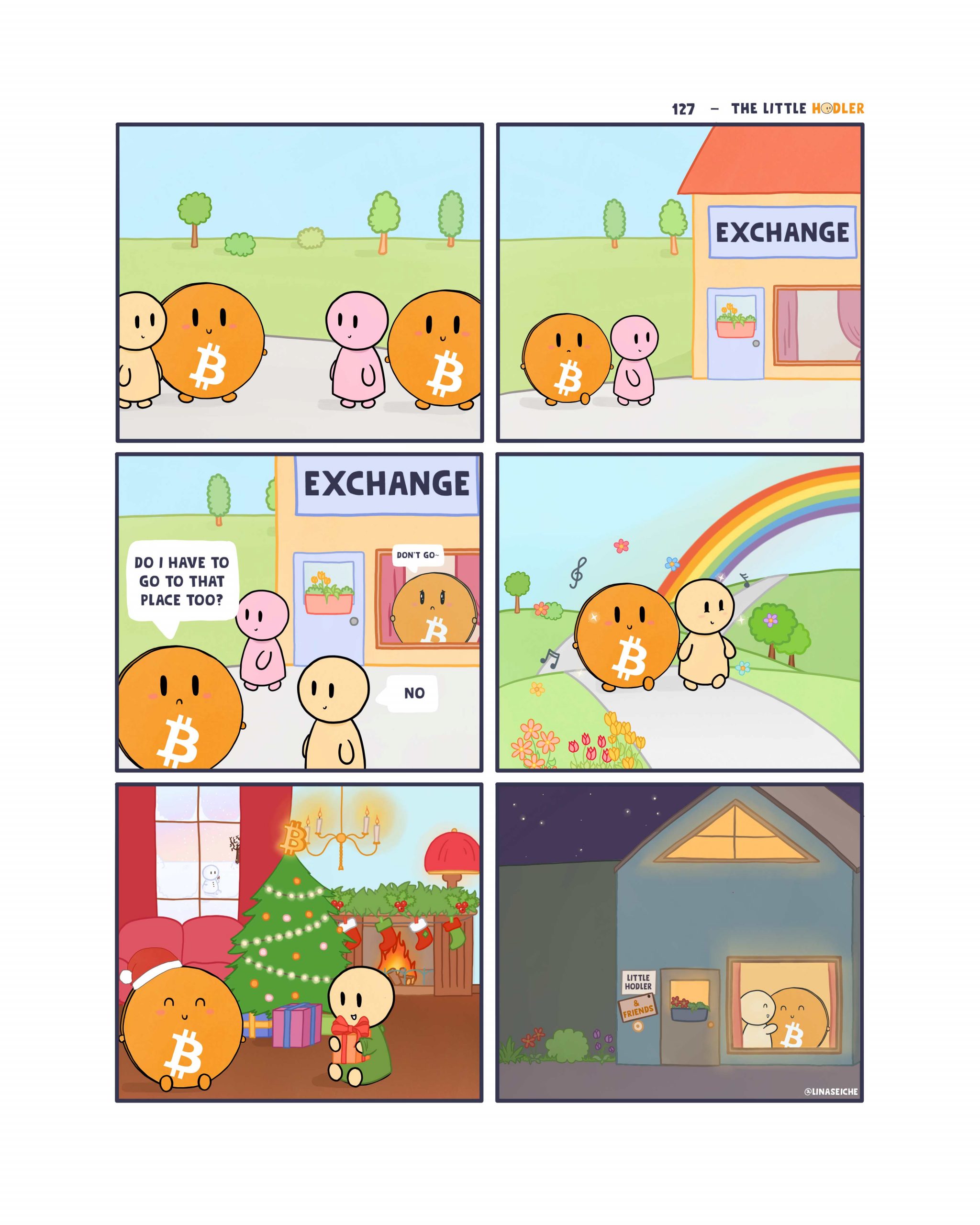
Exodus is trying to build a bridge. You hold your keys. You spend your Bitcoin. One app. No custody handoff. No seed phrase napkin anxiety — at least not the way the old wallet UX made you feel like a secret agent just to check your balance.
The UFC partnership is the part that actually made me smile. Self-custody isn’t just getting a Super Bowl ad or a Wall Street analyst upgrade. It’s walking into the octagon. It’s showing up where people who’ve never heard the term "UTXO" are watching fights and drinking beer. That’s how culture shifts happen — not through white papers, but through visibility.
Now, the honest part: Exodus Pay is version one. The company’s own revenue numbers show they’re still dependent on trading volume, and the broader crypto market is in a rough patch. Self-custody payments at scale is an unproven bet. But here’s what I know — every time someone builds infrastructure that makes self-custody easier, Bitcoin gets stronger. Every time a company chooses "keys on your device" over "trust us, we’ll hold them," the whole ecosystem wins.
This isn’t about Exodus stock. It’s about whether 2026 is the year normal people stop equating "Bitcoin" with "exchange account" and start understanding that holding your own keys is the whole point.
What Beginners Should Do Next
Learn the difference between custodial and non-custodial wallets. A custodial wallet (Coinbase, Cash App, any exchange) means someone else holds your Bitcoin. A non-custodial wallet (Exodus, a dedicated Bitcoin wallet) means you hold the keys. These are not the same thing.
Get a Bitcoin wallet you control. You don’t have to use Exodus specifically — there are many good self-custody wallets. The important thing is that YOU hold the seed phrase and nobody else has access.
Understand that spending Bitcoin doesn’t mean giving up custody. Products like Exodus Pay show that you can hold your own keys and still tap to pay. This is the direction the whole industry should be moving.
Don’t confuse Bitcoin ETFs with owning Bitcoin. An ETF gives you price exposure. A self-custody wallet gives you actual Bitcoin. They are completely different financial instruments with completely different risk profiles.
Remember what happened to Zonda. When an exchange freezes withdrawals, your "balance" becomes a number on a screen you can’t touch. Self-custody means nobody can freeze your money.
FAQ
What is Exodus Pay?
Exodus Pay is a self-custody payments system built into the Exodus wallet. You fund it with Apple Pay, bank transfer, or crypto, then spend anywhere Visa is accepted — while keeping your private keys on your own device.
Is Exodus a wallet or a bank?
Neither, exactly. Exodus started as a self-custody wallet in 2014. Now it’s building a "money operating system" — wallet, payments, card spending, and peer-to-peer sends in one app. Exodus never takes custody of your funds.
Can you withdraw Bitcoin from Exodus?
Yes. Exodus is non-custodial — you control your keys at all times. You can send Bitcoin to any address, just like any self-custody wallet. You’re never locked in.
Is Exodus Pay the same as a Bitcoin debit card?
Similar but different. Most crypto debit cards are custodial — the company holds your crypto and converts it when you swipe. Exodus Pay keeps your keys on your device. The self-custody part is what makes it different.
Is Exodus safe?
Exodus is a publicly traded company (NYSE American: EXOD) and has been around since 2014. Because it’s non-custodial, Exodus itself cannot lose or freeze your funds. The security risk is on you — protect your seed phrase.
Why did Exodus partner with the UFC?
The UFC reaches 700 million fans worldwide — a huge, young, digitally native audience. Exodus wants to bring self-custody awareness into mainstream culture, not just crypto circles. The partnership starts June 1, 2026.
Is this good for Bitcoin adoption?
Yes. Every time a mainstream product makes self-custody easier, Bitcoin adoption grows. The more people hold their own keys instead of leaving Bitcoin on exchanges, the stronger the network becomes.
Should beginners use Exodus or an exchange?
Start with self-custody as soon as you’re comfortable. Exchanges are fine for buying, but you should move Bitcoin to a wallet you control once you understand the basics. Not your keys, not your Bitcoin.
Final Thoughts
Exodus is making the right bet at the right time. Self-custody has been treated like a power-user feature for too long, and the industry needed someone to prove it can work at consumer scale. Whether Exodus Pay delivers on that promise depends on execution — but the direction is exactly what Bitcoin needs.
The UFC deal is the wildcard. If 700 million people start hearing "self-custody" in the same sentence as "UFC," something shifts. It stops being a cryptography lecture and starts being a thing normal people do.
The old financial system showed its hand when it yanked Exodus’s NYSE listing at the last minute. Two years later, Exodus is public, holding its own keys, and sponsoring fights. That’s the kind of resilience you can only build when you actually control your own money.
Self-custody isn’t the future. It’s here. The question is whether the rest of the world catches up.
This article is for education only and is not financial advice.