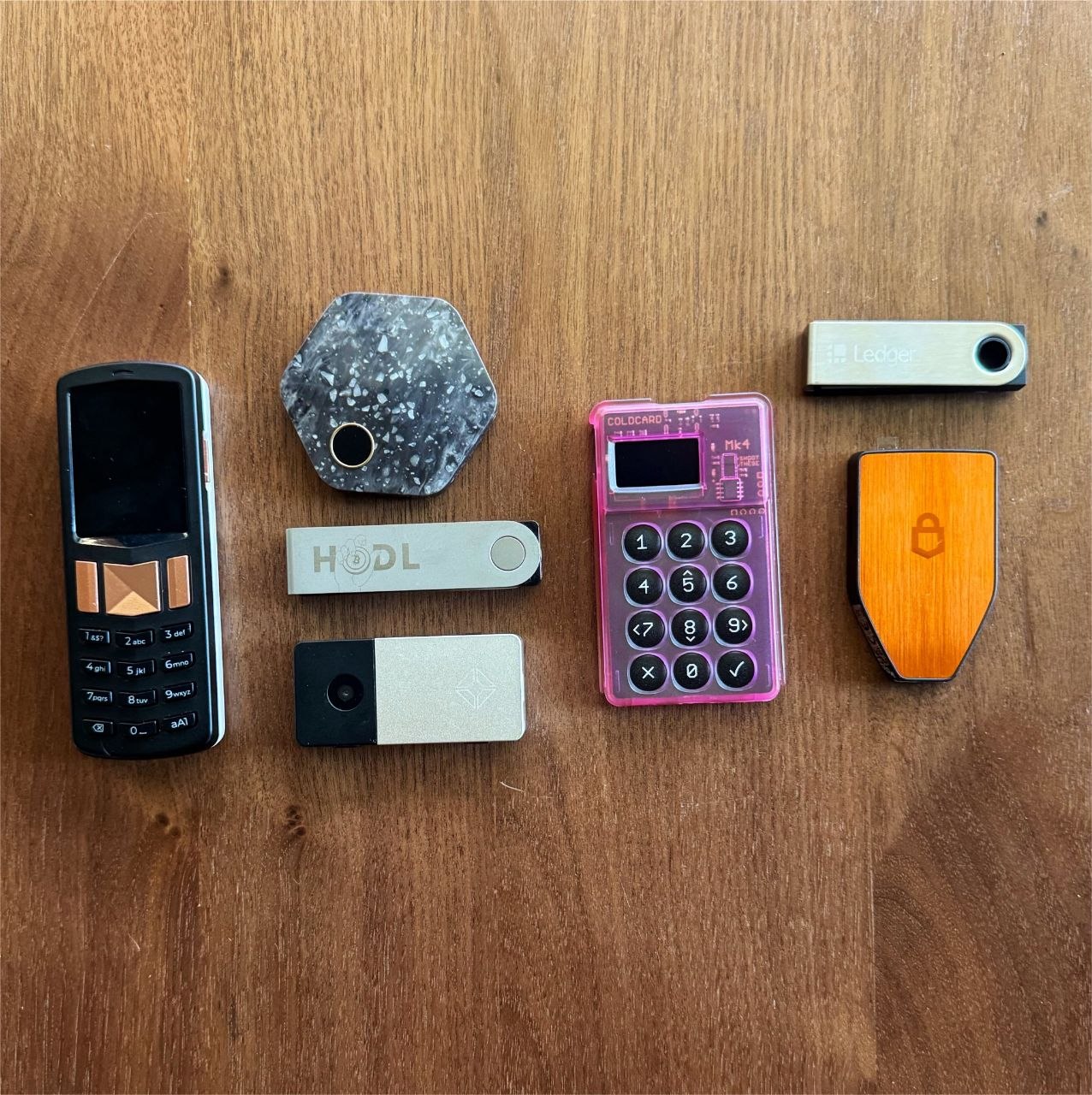

$38 MILLION. 500 WALLETS. ONE BUG. THIS IS THE BIGGEST HARDWARE WALLET THEFT IN BITCOIN HISTORY.
🚨 THE COLDCARD CATASTROPHE: EVERYTHING YOU NEED TO KNOW
On July 30, 2026, Coinkite — the company behind the “most secure hardware wallet in Bitcoin” — dropped a bombshell advisory. A coordinated sweep had just drained roughly 594 BTC, worth about $38 million, from around 500 single-signature Bitcoin addresses.
All of them were Coldcard users.
The Coldcard Bug: 72 Bits Instead of 128
Seeds generated on a Coldcard Mk3 running firmware 4.0.1 (March 2021) through 4.1.9 are at risk. Seeds generated on Mk4, Q, and Mk5 before the fixed firmware releases are also affected — they got 72 bits of entropy instead of the expected 128 bits.
That’s not a minor statistical rounding. That’s the difference between keys that are mathematically unbreakable and keys that an attacker can recompute. No device access. No malware. No wrench. Just math — and AI is making that math cheaper every single day.
THE BUG WAS AVOIDABLE. IT WAS LICENSE PARANOIA.
Remember the timeline:
- July 2020: Foundation announces a competitor wallet built on Coldcard’s GPL-licensed code.
- NVK regrets GPL publicly — a “clone” now exists.
- Nov 2020: Coldcard switches to MIT + Commons Clause to block clones.
- March 2021: A 120-file commit removes the battle-tested GPL crypto libraries and changes the seed generation code.
- March 2021: Version 4.0.1 ships. The entropy bug is born.
They ripped out proven code to keep out competitors — and shipped a bug that just cost users $38 million.
Coinkite’s Own Words: “We Have To Assume Someone Used AI”
In their technical backgrounder, Coinkite admits: “The COLDCARD source code has always been open and publicly available, so we have to assume that someone used AI to review previous versions.”
Open source code, a publicly documented vulnerability window, and AI-driven analysis. The combination was always going to be found. The only question was who found it first — and they found the good guys’ wallets.
Who Is Safe?
Only if you used the dice roll option with at least 50 independent rolls (50-98 rolls = 128 bits, 99+ = 256 bits). A strong unique BIP-39 passphrase helps but is not a guaranteed fix. If you’re not sure about either — assume your seed is compromised and migrate.
Fixed firmware is out now: Mk3 → 4.2.0, Mk4/Mk5 → 5.6.0, Q → 1.5.0Q, Edge → 6.6.0X/6.6.0QX. Updating does NOT repair an already-generated seed. You must generate a new one and move your funds.
The Ragebait Truth
“Not your keys, not your coins” — but what if your keys were predictable the whole time?
Hardware wallets are supposed to be the END of the trust chain. They’re the answer to “just hold your own keys.” And the most trusted name in the space just proved that even cold storage is only as good as the randomness it’s built on.
This is a turning point. The lawsuits are coming. The class actions are coming. And every hardware wallet maker on earth just got the memo: if your seed generation isn’t independently verifiable and your code isn’t truly open, your users are beta testers.
What Should You Use Instead?
Here’s the thing — the Coldcard bug was found BECAUSE its source code was open. Closed-source wallets can’t even give you that assurance; you just have to trust them.
If you want a hardware wallet where you can verify every line of code, look at the Blockstream Jade. It’s fully open source — firmware, app, everything. No “source available” tricks. No licensing rewrites that break entropy. Verifiable builds, air-gapped via QR, works with your own node.
👉 GET THE BLOCKSTREAM JADE — USE COUPON CODE LOVEISBITCOIN
Open source isn’t just a philosophy. It’s the only way you can actually verify that your keys are being generated the way they’re supposed to be. After $38 million vanished, that’s not a nice-to-have. It’s the whole point.
Move your funds. Generate fresh seeds on verified firmware. And from now on — demand open source.