
In 2016, the Bitfinex hack shook the crypto world. Hackers made off with roughly 4.8 million BTC — then worth $72 million, now worth an eye-watering $46 billion. For years, the crypto world assumed that bitcoin was gone forever. The FBI disagreed.
In one of the most dramatic on-chain moves in recent memory, the US government transferred 8.2 BTC — a small fraction of the seized funds — to Coinbase Prime. That’s roughly $628,000 at current prices going straight to one of the world’s largest custodians.
The irony is almost perfect.
The US government spent years prosecuting the Bitfinex hack, arguing that the exchange failed to protect its customers. The whole point of the case was that Bitcoin exchanges aren’t banks — they can’t be trusted with your money. That was the government’s position.
And then they put their own Bitcoin on an exchange.
What Coinbase Prime Actually Is
Coinbase Prime is not the Coinbase you use to buy pizza with a debit card. It’s an institutional custody and trading platform. Think: hedge funds, family offices, and governments holding large amounts of bitcoin.
Institutional custody sounds safe. It isn’t.
Mt. Gox was institutional. FTX was institutional. Every major exchange hack in history happened because somewhere, somehow, someone was keeping private keys on a computer connected to the internet.
The difference between Coinbase Prime and your Ledger is the same as the difference between a hotel safe and a bolted safe in your basement. One is convenient. The other is actually yours.
The Hackers Are Free. The Bitcoin Isn’t.
Here’s the part that makes this story genuinely bizarre.
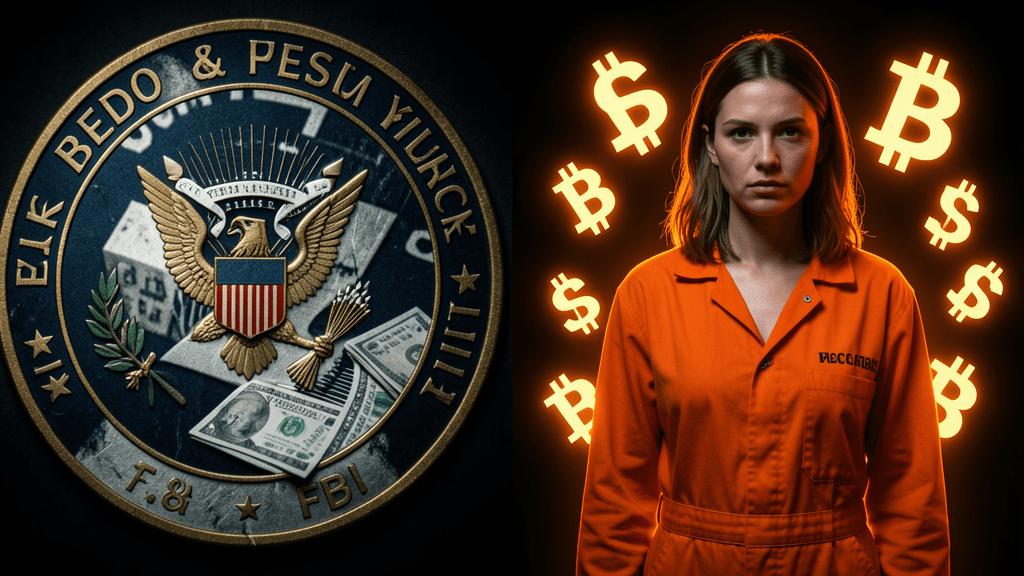
Heather Morgan — better known as “Razzlekhan,” the one-woman Genghis Cobain of fintech raps — and her husband Ilya Lichtenstein were sentenced in 2024. Morgan got 18 months. Lichtenstein got five years. They are both already out.
The people who stole the Bitcoin served less time than the Bitcoin stayed in government custody.
And while they walk free, the government’s solution for protecting what it seized was to put it on a third-party custodian — the very model of everything wrong with holding other people’s Bitcoin.
Why This Matters for Every Bitcoin Holder
This isn’t just a story about government hypocrisy (though there’s plenty of that).
It’s a reminder that custody is everything in bitcoin.
If you’re holding Bitcoin on an exchange — any exchange — you are one hack, one subpoena, or one “security incident” away from learning exactly what the Bitfinex customers learned in 2016. The exchange’s Bitcoin is not your Bitcoin.
The only Bitcoin you truly own is the Bitcoin whose private keys you hold yourself. A hardware wallet under your control, seed phrase written down and stored in more than one place.
Not your keys. Not your bitcoin. Self-custody isn’t paranoia — it’s the whole point.
How to Actually Protect Your Bitcoin
If you’re new to Bitcoin and wondering what this means for you:
- Never leave more Bitcoin on an exchange than you’re willing to lose. Treat every exchange like it will eventually be hacked. Because statistically, it will be.
- Get a hardware wallet. Brands like Ledger, Trezor, or Coldcard store your private keys offline. They cost between $80-$300 and have stopped countless people from losing everything.
- Write down your seed phrase. Multiple copies. Paper, metal, somewhere safe. Not on your computer, not in your email, not on cloud storage.
- Tell people about it. Bitcoin inheritance and access recovery are real problems. Make sure someone you trust knows how to access yours.
- Consider multisig. For larger amounts, multisignature setups require more than one key to move funds. It’s like a vault that needs two out of three keys — far harder for attackers.
Frequently Asked Questions
Isn’t Coinbase safer than a hardware wallet?
No. Coinbase is a business that can be hacked, subpoenaed, or go bankrupt. Your hardware wallet holds keys that exist nowhere on any network. The comparison isn’t even close in terms of actual security.
But what if I lose my hardware wallet?
If you have your seed phrase backed up properly, you can restore your Bitcoin on any wallet. That’s why the seed phrase backup is more important than the device itself.
Is the government wrong to use Coinbase Prime?
They’re free to do it. But it does undercut the moral authority of every prosecution they brought against Bitfinex. The message was: exchanges are dangerous. The action was: we’re putting $628,000 on an exchange.
What’s the most Bitcoin someone has lost due to exchange hacks?
Mt. Gox lost 850,000 BTC in 2014 — at the time worth $460 million, now worth over $80 billion. Customers are still fighting for their money back more than a decade later.
Bitcoin is a powerful technology. It is also, unlike a bank account, something you can truly own — or truly lose. The choice is in your hands. Make it count.