
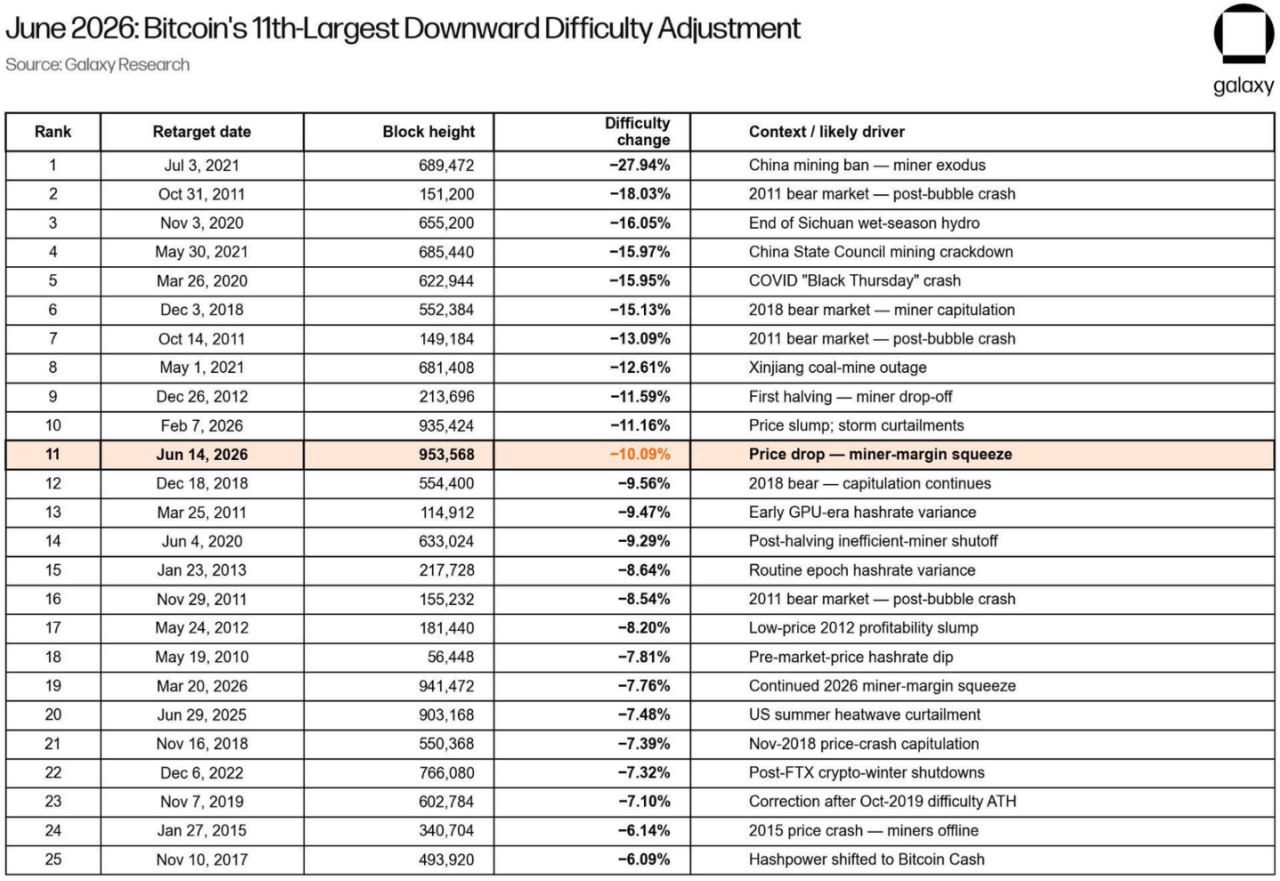
The 11th biggest difficulty drop in Bitcoin’s entire history just happened—and most people didn’t notice.
On June 14, 2026, the difficulty dropped 10.09% at block 953568, falling from 138.96T to 124.93T. That makes it the 11th-largest downward adjustment in Bitcoin’s history and the second-biggest drop of 2026.
What This Means for Home Miners
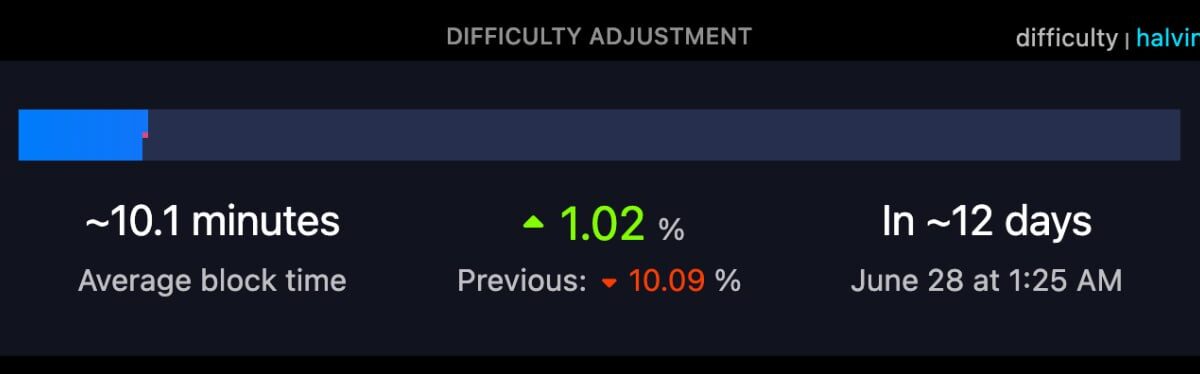
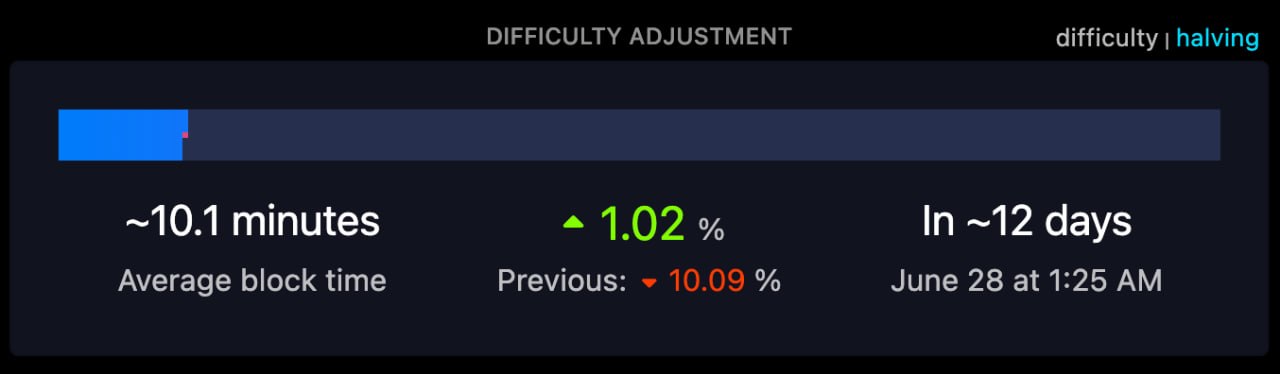
The lower difficulty means each block now takes less computational work to mine, offering real relief to miners who stayed online through the recent hashrate shuffle. The next adjustment is estimated around June 28, 2026, and is currently projected to be a slight increase—so this window won’t last forever.
A 10.09% difficulty drop translates to roughly 11% more BTC mined per unit of hashrate. Your hardware didn’t get faster—the competition got thinner. Small home miners like Bitaxe operators benefit from this just as much as the big farms.
Take Advantage
This is your chance to find the next Bitcoin block. While the big farms are fighting over thinner margins, home miners with efficient hardware are quietly stacking sats at a 11% discount on work.
If you’ve been on the fence about solo mining or expanding your home setup, this difficulty reprieve is exactly the kind of window you wait for. The hashrate will adjust back up—make the most of it while it lasts.
Check out our Bitaxe collection →
Related Reading
- Solo Mining vs Pool Mining: Which Is Right for You?
- How to Set Up a Bitaxe Solo Miner
- What Is Bitcoin Mining Difficulty? A Beginner’s Guide
Bitcoin mining difficulty adjusts every 2016 blocks (~2 weeks) to maintain a consistent 10-minute block interval. When hashrate drops, difficulty follows—making it easier for the remaining miners to find blocks.