
Quick Summary
- Bitcoin spot ETFs have seen roughly $6.4–7 billion in net outflows over the past 5–7 weeks — the worst streak on record.
- Over 50% of all Bitcoin supply is now underwater (held at a loss), a level that historically marks bear market bottom zones.
- BlackRock sold ~1,000 BTC on June 23 alone as ETF outflows hit 44 consecutive days of negative Coinbase premium.
- Analysts at 10x Research predict a further drop to $55,000 before establishing the cycle low.
- Meanwhile, corporate treasuries bought 2,398 BTC in one reported week with zero corporate selling — the accumulation never stopped.
Your ETF Is Bleeding Out
Let’s get one thing straight. Wall Street isn’t panicking because Bitcoin is broken. Wall Street is panicking because Wall Street bought at $90K and now it’s $62K and their limited partners are screaming.
That’s the dirty secret of the ETF flow data everyone is freaking out about. The $7 billion in outflows over seven consecutive weeks isn’t “smart money” exiting Bitcoin. It’s allocators locking in losses because they have quarterly redemption windows, because they bought an ETF instead of real Bitcoin, because they trusted a financial product instead of the network itself.
And guess what? That was always going to happen. ETFs are not Bitcoin. They’re casino chips that happen to track the price of Bitcoin.
The $55K Prediction Everyone’s Talking About
Markus Thielen at 10x Research says Bitcoin could fall to $55,000 before finding a cycle low. Maybe he’s right. Maybe he’s wrong. The price prediction isn’t the story.
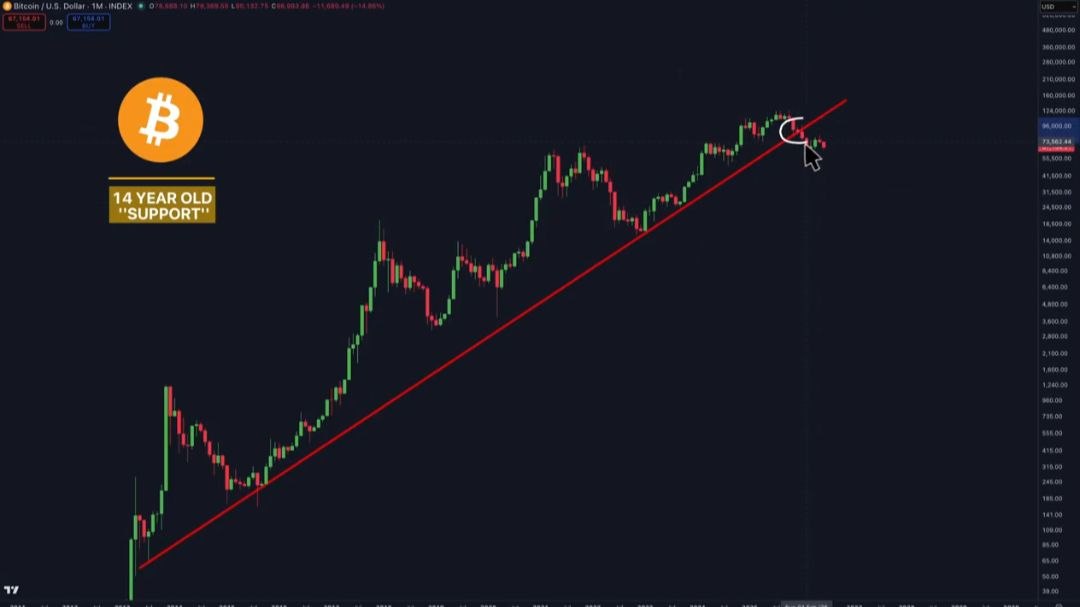
The story is that over half of all circulating Bitcoin is now held at a loss — about 10.5 million BTC underwater. This signal has appeared before every major bear market bottom: 2015, 2018, March 2020, and 2022. Every single time, it was the zone where weak hands sold to strong hands.
Bitcoin has also touched its 200-week moving average at ~$61,000 — a line that has historically marked the floor of every bear market cycle. The Rainbow Chart? Bitcoin has entered the “BTC is dead” zone. If you’ve been through a Bitcoin cycle before, you know exactly what that means for what comes next.
What Corporate Treasuries Are Doing While You Panic
Here’s the part the CNBC headlines won’t tell you. Corporate Bitcoin treasuries bought 2,398 BTC in a single reported week, with zero corporate selling. Not a single company that holds Bitcoin on its balance sheet sold during this rout.
Strategy (formerly MicroStrategy) isn’t selling. Metaplanet isn’t selling. Semler Scientific isn’t selling. The companies that actually understand what they own are accumulating, while the ETF tourists who bought a financial product because their wealth manager told them to are running for the exits.
That’s not a bull market and a bear market. That’s conviction vs. speculation. And it’s happening in plain sight.
Why Self-Custody Matters More Than Ever
Every single person who bought a Bitcoin ETF and is now selling at a loss learned a painful lesson: you don’t own the Bitcoin, you own a contract. When the price drops and the redemptions pile up, the ETF manager doesn’t care about your conviction. They sell. That’s the job.
If you held real Bitcoin in a wallet where you control the keys, you wouldn’t be selling right now. You’d be buying, or at worst holding, while the tourists panic. The difference between a panicked seller and a calm accumulator is literally just a seed phrase.
Self-custody isn’t a political statement. It’s the difference between being forced to sell and choosing to hold.
The CLARITY Act Wild Card
Here’s what nobody is talking about while staring at red candles. The CLARITY Act has bipartisan support in the House and is likely to pass. A hearing is scheduled for July 17. The White House is negotiating details. This legislation would provide the first real regulatory framework for crypto markets in the United States.
Every institutional investor that sold in the past seven weeks will want back in once the regulatory fog clears. The question is whether they’ll be buying at $55K or $85K.
The Bottom Line
Wall Street panic-sold $7 billion in Bitcoin. Corporate treasuries bought thousands of coins. Long-term holders accumulated. The 200-week MA held. The on-chain signals screamed “this is a bottom zone.” And the same media that called Bitcoin “digital gold” at $126K is now running “Bitcoin is dead” headlines at $62K.
Nothing changed about Bitcoin itself. The blocks are still being mined. The supply is still capped at 21 million. The network has never been more secure. The only thing that changed is the price, and the price is the least interesting thing about Bitcoin.
Are you buying, selling, or letting Wall Street make the decision for you?
This article is for education only and is not financial advice.