
They call it adoption. It is a custody layer with a ticker on it.
On Tuesday, during SpaceX’s third-quarter earnings call, Elon Musk confirmed that SpaceX and Tesla are exploring a merger. Both companies have stood up special committees of independent directors to assess a tie-up. If it happens, the combined company would hold 30,221 bitcoin — SpaceX’s 18,712 plus Tesla’s 11,509 — worth roughly $2.5 billion at today’s price of about $83,500.
Read that number again. Thirty thousand two hundred and twenty-one coins, sitting inside a company that does not sell bitcoin, was not built on bitcoin, and answers to shareholders who bought rockets and cars.
Nobody asked them if they wanted to be a bitcoin treasury. Nobody is going to.
“An odd kabuki dance”
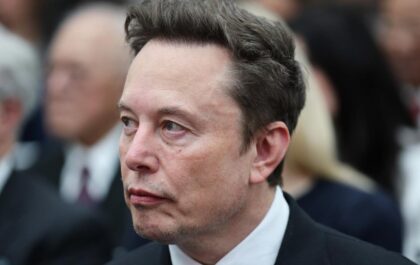
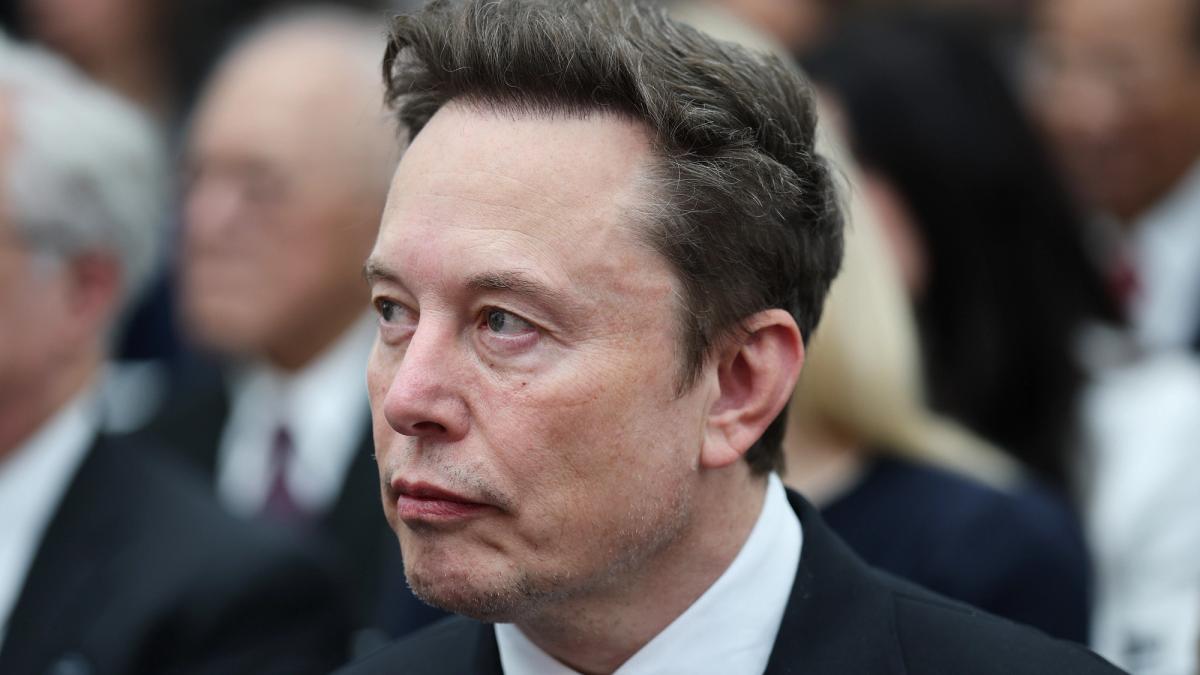
Here is the man with roughly 36% of SpaceX (48.4% counting restricted shares and unexercised options) and 19.8% of Tesla, describing his own position in the deal:
“It’s an odd kabuki dance where two groups of people are talking, and I can’t be in the conversation. The special committees have not reached agreement on the terms of any transaction.”
Then the line that should interest you more than any of the AI hype on that call:
“Do I think it would be a good idea, yes. But at the end of the day, the shareholders have to be supportive of this.”
Shareholders. Not holders. Not people with keys. Shareholders — the crowd that gets diluted, restricted, diluted again, and stands behind the creditors if the thing ever goes sideways. That is who gets a say over 30,221 bitcoin. Not you. Not even him, technically, until the committees finish their dance.
The hypocrisy nobody is pointing at
For ten years the same financial press that now types “corporate bitcoin treasury” with a straight face called bitcoin a speculative casino, a rat poison squared, a bubble for degenerates. Put the exact same coins on a balance sheet with a ticker next to them and it becomes “strategy.” Same asset. Different custodian. Instantly respectable.
And notice what this merger is actually being sold on. SpaceX posted third-quarter revenue of $14.58 billion against a $12.7 billion consensus, earnings per share of 35 cents against 15 cents expected, and capital expenditure of $19.59 billion — of which $16.44 billion goes to AI. Shares jumped about 9% to $161 in premarket trading. Tesla reports after the close, with analysts expecting $28.13 billion in revenue and 44 cents a share.
Bitcoin is not in that pitch. Bitcoin is in the footnotes. And the footnote is the only line item in this entire deal that you can independently verify yourself, on your own node, without trusting a single person on that call.
Meanwhile, retail did the exact opposite of what the insiders did
- The week of October 12, US-listed spot bitcoin ETFs bled $681 million in net outflows — the heaviest week of the year.
- Bitcoin is still roughly 33% below its 2025 high, trading around $83,500 today.
- On Monday, BlackRock’s IBIT pulled in $665.16 million in a single session — its largest day since October 2025.
- Michael Saylor declared the next bull run has begun and called for six figures inside twelve months.
So the pattern is this. Insiders sit through a 33% drawdown holding actual coins, then merge two companies to keep holding them. Retail sells the drawdown, buys back the wrapper on the bounce, and pays an annual fee for a claim on coins it will never be allowed to withdraw from a vault.
One of those groups is behaving like an owner. The other is behaving like a customer.
The part that should actually bother you
None of this is illegal and none of it is stupid. It is simply not yours. If the merger closes, those 30,221 coins belong to a treasury controlled by board committees at a company spending $19.59 billion a year on rockets, robots and AI. A reserve like that is not a religion. It is an asset on a balance sheet — one that can be pledged, lent, or sold to fund the next buildout, and you will read about it in a filing after the fact.
You have watched this film before. Cobo announced it is killing its wallet app and will charge 2% a month, minimum $100, on any coins you leave behind (we covered that here). Coinbase is accused of hiding over $1 billion in hacks, and the only recourse available to the people involved is taking the company’s word for it. BlackRock filed for a bitcoin ETF that caps your upside and calls it protection (the details here). Custody is custody. It does not get safer because the balance sheet got bigger.
What 30,221 coins actually prove about Bitcoin
They prove the network does not care who holds it. Blocks keep coming every ten minutes whether those coins sit in a corporate treasury or on a $70 hardware wallet in your desk drawer. Same supply cap. Same rules. Same 21 million. No committee, no special committee of independent directors, no kabuki dance.
Corporate treasuries are adoption of the asset. They are not adoption of the point. SpaceX has held bitcoin since the S-1 disclosed 18,712 coins worth $1.45 billion, and that is genuinely bullish for price. It is not one inch of progress toward a world where people hold their own money — the same way 80% of “Lightning payments” flowing through custodians is not the self-custody victory it gets marketed as.
The tell is simple. When the biggest bitcoin story of the day is two companies merging, and neither of them will let you withdraw a single sat, that is not adoption accelerating. That is the same financial industry you were trying to escape — just wearing an orange hoodie now.
If you want the exposure, own the thing they are holding
You cannot buy into a board committee. You can buy the only asset in this story that nobody can merge out from under you.
Buy non-custodially with Bull Bitcoin — no account, no IOU, coins straight into your own wallet. Use coupon code LOVEISBITCOIN for a discount: https://loveisbitcoin.com/bull
Keep the keys on a Blockstream Jade, back the seed up in titanium with StampSeed, and run your own node with Start9. Same coupon — LOVEISBITCOIN — across the whole stack at loveisbitcoin.com.
Thirty thousand coins can be merged, pledged, or re-priced by a committee you will never get on the phone. Your stack cannot — as long as the keys are yours.
So which side are you on?
Two groups of people are deciding what happens to 30,221 bitcoin this week, and neither group is you. The ETFs are collecting fees for a claim. The treasuries are collecting coins for a balance sheet. The only version of this where you actually own something is the boring one: buy it, withdraw it, hold the keys.
If a special committee can decide the fate of 30,221 coins without a single vote from the people holding the receipts, why is your stack still sitting on somebody else’s balance sheet? Tell us in the comments.
30,221 BITCOIN IS ABOUT TO SIT INSIDE ONE COMPANY - AND MUSK JUST ADMITTED HE WON'T BE IN THE ROOM WHEN THEY DECIDE WHAT HAPPENS TO IT