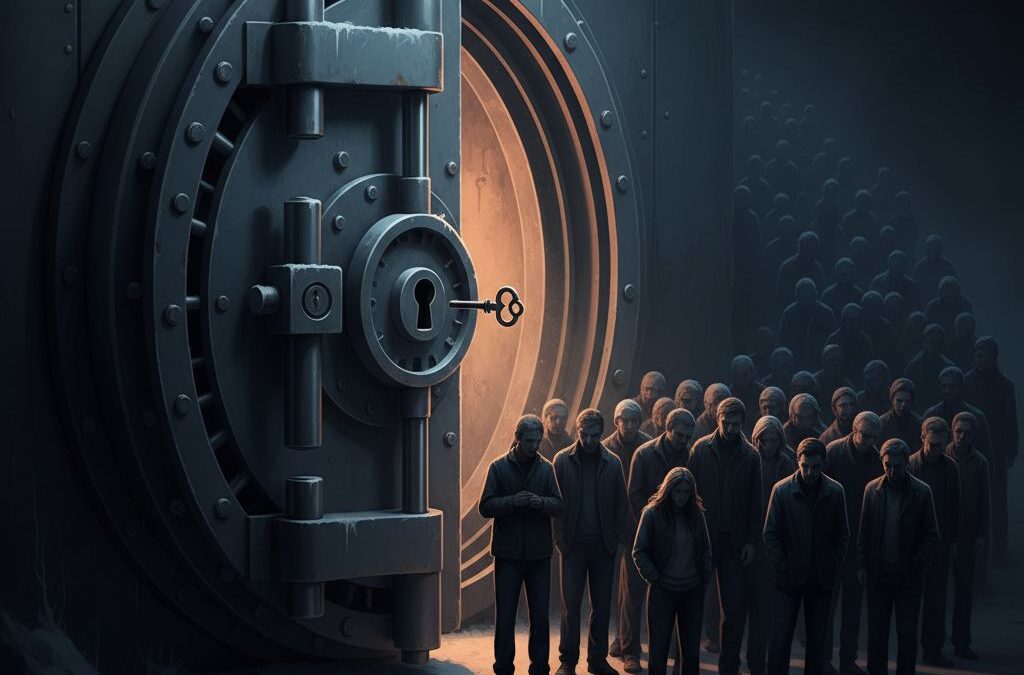


Twelve years. Six extensions. One more year.
If your Bitcoin had been sitting in someone else’s wallet since 2014, you already know the feeling. On Friday, the Tokyo District Court approved moving Mt. Gox’s repayment deadline from October 31, 2026 to October 31, 2027, at the request of rehabilitation trustee Nobuaki Kobayashi.
That is the sixth extension since 2023. Not the first. Not the second. The sixth.
And then come the two sentences that should stop you cold: the notice did not say how many creditors are still unpaid, and it did not say how much Bitcoin is still owed. You were told to wait. You were not told how many of you are still waiting.
What Actually Happened
- The deadline for base, early lump-sum and intermediate repayments moved from Oct. 31, 2026 to Oct. 31, 2027.
- Mt. Gox started repaying creditors in Bitcoin and Bitcoin Cash in July 2024.
- By March 2025, the trustee said more than 19,500 creditors had been repaid.
- Everyone else: procedures incomplete, or “issues in processing.”
- Wallets attributed to Mt. Gox still hold roughly 34,400 BTC — about $2.8 billion at today’s price near $81,500 — according to Arkham Intelligence.
The Number That Should Make You Angry
$2.8 billion. Not lost in a hack last week. Not frozen by a government. Sitting in wallets controlled by a court process, twelve years after the exchange that held it stopped letting anybody withdraw.
You can call that “rehabilitation.” You can also call it what it is: the longest-running advertisement for one sentence nobody in this industry wants printed on a mug — if you don’t hold the keys, the schedule is not yours.
In February 2014, roughly 850,000 BTC vanished from Mt. Gox. About 200,000 were later found in an old-format wallet. The man who ran the exchange was convicted of manipulating its records and handed a suspended sentence. The customers were handed a claim number and a queue.
Twelve years later, the queue is still open.
Who “They” Are, And Why It Doesn’t Matter
A trustee, a Tokyo court, a legal process, a repayment agent, a claims portal. None of them are villains. Most are doing a genuinely hard job with a 12-year-old mess.
But notice something: not one of them needed your permission to keep your coins another year.
That is what custody is. It is not a promise that your Bitcoin is safe. It is a promise that your Bitcoin exists and that somebody with better standing than you will eventually decide what happens to it. Every custodian’s terms of service has a version of this paragraph in it. You just don’t read it until the year gets extended.
The Comfortable Lie The Industry Keeps Selling
“Exchanges are safe now. We’re regulated. We’re audited. We’re different from 2014.”
This month alone: a Dutch exchange was declared bankrupt with customer funds missing, and a $2.8 trillion bank launched a Bitcoin custody product while its CEO lobbies government to write the rules against Bitcoin. The marketing changes. The structure does not. Somebody else holds the coins, and you hold a login.
Mt. Gox creditors are not unlucky people who made a wild bet. They did the normal thing. The thing every app, every exchange, and now every bank with a Bitcoin logo is still telling you to do.
The Only Part Of This That Is Actually Yours
Here is the unsentimental math. Exchanges get hacked. Custodians get acquired. Trustees ask courts for extensions. Courts grant them. None of those events can reach a seed phrase that never left your house.
So do the boring work: read our guide to choosing a Bitcoin wallet and stop treating your exchange balance as a wallet. If you want to see how fast “temporary maintenance” turns into a legal saga, read what happened when Zonda’s cold wallet crisis froze customer Bitcoin.
And when you buy, buy somewhere that never takes custody of your coins in the first place. Bull Bitcoin: self-funded since 2013, licensed across all 27 EU countries, no VC money, no shitcoin exposure. Bitcoin, delivered straight to your own wallet.
Coupon: LOVEISBITCOIN
https://loveisbitcoin.com/bull
The Question
If a court can extend your access to your own Bitcoin by another year — six times in a row — at what point does “my Bitcoin is on an exchange” stop meaning ownership and start meaning a subscription to somebody else’s promise?
Tell us in the comments: what is the longest you have ever waited for a platform to give your own money back — and did you get it?
This article is for education only and is not financial advice.
Read more: KNAKEN BANKRUPT: €7M OF CUSTOMER FUNDS MISSING and CITI JUST VOLUNTEERED TO HOLD YOUR BITCOIN.
MT. GOX JUST ASKED ITS VICTIMS FOR ONE MORE YEAR — SIXTH EXTENSION, TWELVE YEARS, AND $2.8 BILLION STILL SITTING IN A WALLET