
BlackRock just told you who the next Bitcoin buyer is. It isn’t you.
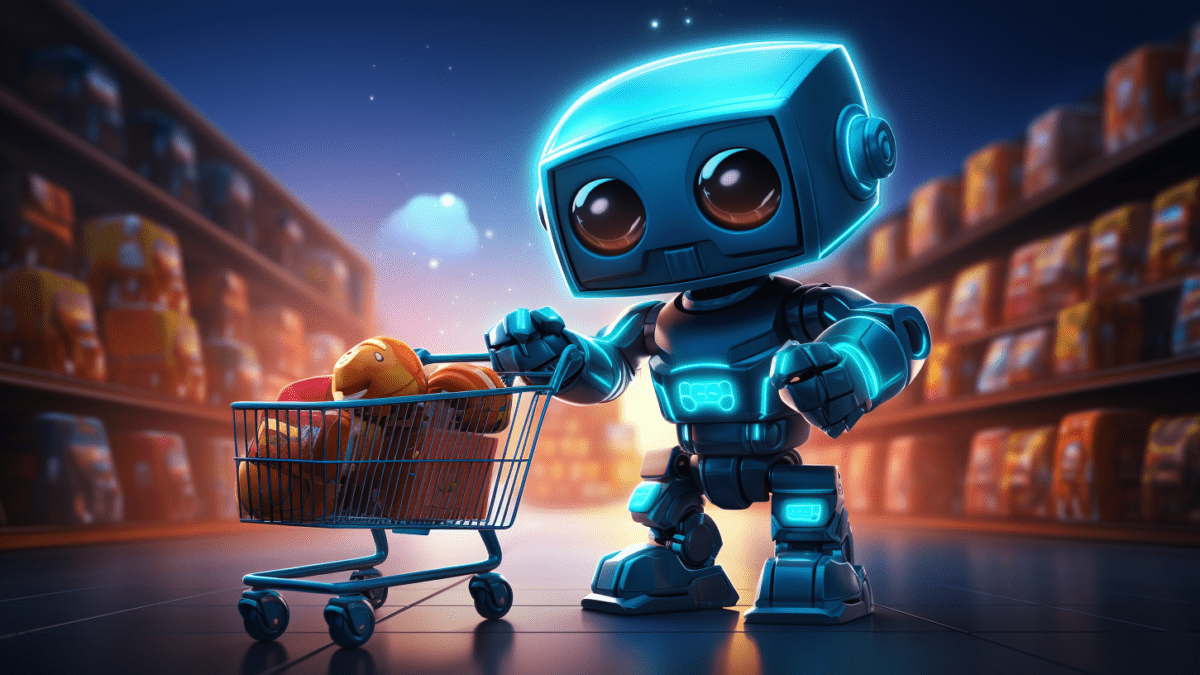
It’s a robot. A software agent booking flights, buying data, renting compute by the second – and, according to the biggest asset manager on earth, saving the profits in Bitcoin.
Here’s the part that should make you angry: the machine gets its own keys by design. It has to. It can’t ask a custodian for permission at 3 a.m.
You can. And that’s exactly the problem.
What BlackRock Actually Said
BlackRock runs roughly $15 trillion. This week it published a research note called “The Machine-Native Economy,” and the thesis is simple: the next wave of crypto demand won’t come from human investors. It will come from software.
The reasoning is brutally practical. Card networks and automated clearing houses were built for people – human onboarding, fees that make a half-cent payment pointless, settlement that clocks out for the weekend. AI agents don’t work bankers’ hours. They buy API calls, on-demand data and consumption-based compute around the clock, in fractions of a cent, at 3 a.m. on a Sunday.
So the report concludes crypto rails win, with a neat split: stablecoins as transactional money, bitcoin as the store of value. It even cites Bitcoin Policy Institute research finding that controlled simulations “generally favored stablecoins for everyday payments and bitcoin for long-term value preservation.”
Read that again. The company that runs the largest spot Bitcoin ETF in the world is telling the market that bitcoin’s job is long-term value preservation.
Why This Is Your Problem
An AI agent that holds bitcoin holds a key. That is the entire point. It cannot phone a custodian at 3 a.m. to ask whether it is allowed to move its own money. It needs a keypair it controls and a signature it can produce on demand.
BlackRock’s own research describes a world where the machines are self-custodied – by necessity, not ideology.
Now look at what BlackRock sold you. IBIT: over $67 billion in assets, an ETF share, market hours only, a management fee, and zero keys. Your “bitcoin exposure” is a line item in a broker’s database, reconciled by humans on a schedule built for the 1970s – the exact architecture the report calls obsolete.
That’s not a conspiracy. It’s a business model. The ETF doesn’t break because bitcoin breaks. It breaks because it’s a permission slip – and permission slips get denied. Banks now offer to “hold your bitcoin” while deriving the private keys themselves. That isn’t custody. That’s captivity with a vault door. Meanwhile a marketing campaign tells 60 million Americans that bitcoin is money while the app holds the keys.
And when the flows get ugly, the same crowd that told you to buy the wrapper quietly buries the math.
So the robots will get something you were told you didn’t need: control.
The Love Is Bitcoin Takeaway
The strongest argument for self-custody in 2026 just came out of BlackRock’s research department, and they are far too smart to say it out loud.
If a piece of software can be trusted to hold its own bitcoin, so can you. The barrier was never intelligence. It was habit – and habit is precisely what an ETF sells you.
Start where it matters. Get a wallet where you hold the keys, and a hardware device where the keys never touch the internet. Grab a Blockstream Jade and buy your bitcoin peer-to-peer with Bull Bitcoin – no custodial middleman, no permission desk, no counterparty deciding whether you’re allowed to move your own money.
Use coupon LOVEISBITCOIN and go to loveisbitcoin.com/bull.
The machines are coming for the money. Make sure you still control yours when they arrive.
So here’s the question: if a shopping-cart robot can be trusted with its own bitcoin keys, what exactly is your excuse for letting a $15 trillion asset manager hold yours?
This article is for education only and is not financial advice.
$15 TRILLION BLACKROCK SAYS ROBOTS WILL SAVE IN BITCOIN - AND THE ROBOTS WILL HOLD THEIR OWN KEYS. YOU STILL WON'T.