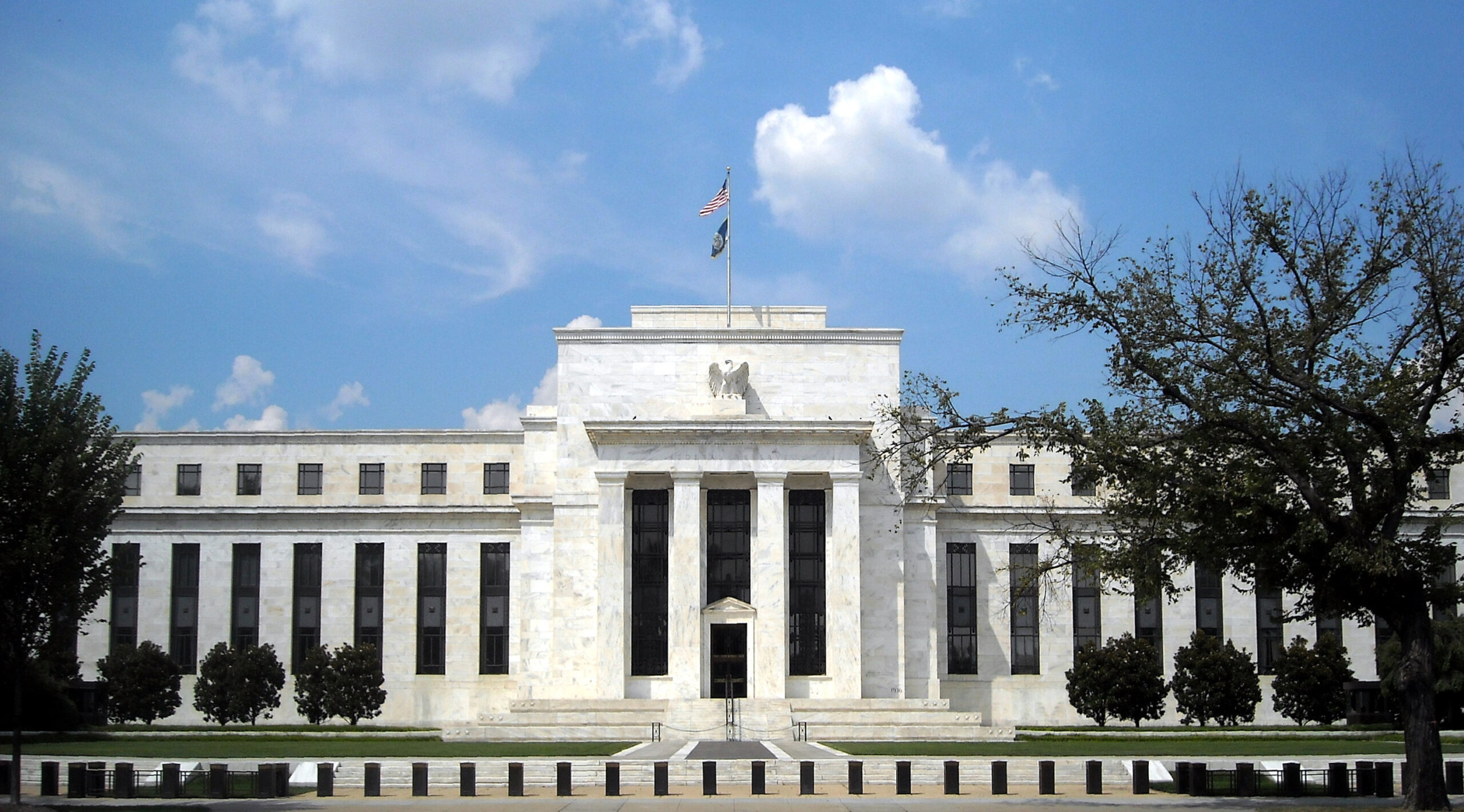

THE GOVERNMENT PRINTED THE NUMBER. BITCOIN FLASHED $85,500. TWO HOURS LATER IT WAS GONE.
Inflation came in soft. The Fed’s own gauge of American price pressure — core PCE — rose just 0.2% in August, below the 0.3% that the economists had penciled in. Year-over-year it sat at 3.0%, a full 0.3 points lighter than expected.
The market heard "good news." Bitcoin didn’t.
Within minutes of the print, BTC jumped 2% and punched through $85,500. The leveraged shorts got squeezed for the third time this month. The tweets went up. The charts turned green.
Then, in under two hours, all of it gave back. Bitcoin slid right down to $84,000 — the exact price it was at before the Fed told the world inflation was cooling. The Nasdaq, for the record, kept its gains. Up over 1% into a session high.
That’s the difference between an asset the market votes on with its eyes open and an asset the market votes on with its fingers crossed.
THE RECEIPTS
- Core PCE, August: +0.2% month-over-month vs 0.3% forecast. +3.0% year-over-year vs 3.3% expected.
- Bitcoin: +2% spike above $85,500 in the minutes after the print — then fully reversed to $84,000 within two hours.
- Leveraged shorts: squeezed out of their positions during the spike, per CoinDesk.
- The stock market: Nasdaq up over 1% to a session high. It kept what it got. Bitcoin didn’t.
- The backdrop: Chicago PMI leapt to 58.8 in September from 47.1 — blowing past the 51.2 forecast. Strong economy, hot inflation prints, a Fed that hiked in September, and CME FedWatch still pricing a 75% chance of another hike in October.
THE IRONY
The crowd’s whole trade was "soft inflation, soft Fed, soft everything." They bought the spike with leverage. And the moment the print proved out, the asset they bought to escape fiat inflation traded like a tech stock — chasing the headline, paying for the reversal.
Oil printed above $100 in the same week. The dollar stayed strong. The 10-year yield sits at its highest in 19 years after breaking 5% on September 28. And the asset everyone bought as the inflation hedge is now 34% below its all-time high of $126,080, with the softest inflation print of the year doing nothing to move it.
Not because Bitcoin failed the test. Because the test is being run by people who treat it like a stock and trade it like a rumor.
THEM VS US
They print the number. They set the rate. They decide what "inflation" means at the Fed’s own discretion. And every time the number lands, the same reflex runs: spike the green asset, squeeze the short, move on to the next print.
You don’t have to live that cycle. The reason Bitcoin was invented was a dollar that gets looser every year you hold it. The reason people keep it in self-custody is that no print — soft or hot — should be able to make your coins move at all. The PCE number tells you about their money. It tells you nothing about yours.
LOVE IS BITCOIN TAKEAWAY
If you’re still watching the print like a stock chart, you’re doing it the slow way. Get a physical wallet, move what matters, and stop paying the spread every time the Fed blinks.
Get a Coldcard and use coupon code LOVEISBITCOIN at https://loveisbitcoin.com/bull
THE QUESTION
The Fed just printed the softest inflation number of the year and Bitcoin gave back the entire move in two hours. If the "inflation hedge" can’t hold a good print, what exactly was it hedging?
Love Is Bitcoin is not financial advice. Do your own research.
Sources: CoinDesk live markets (Sep 30 2026), CoinDesk "The bitcoin price level bulls need to defend" (Sep 30 2026), 24/7 Wall St "Bitcoin: Is It the Inflation Hedge We Thought It Would Be?" (Sep 30 2026).