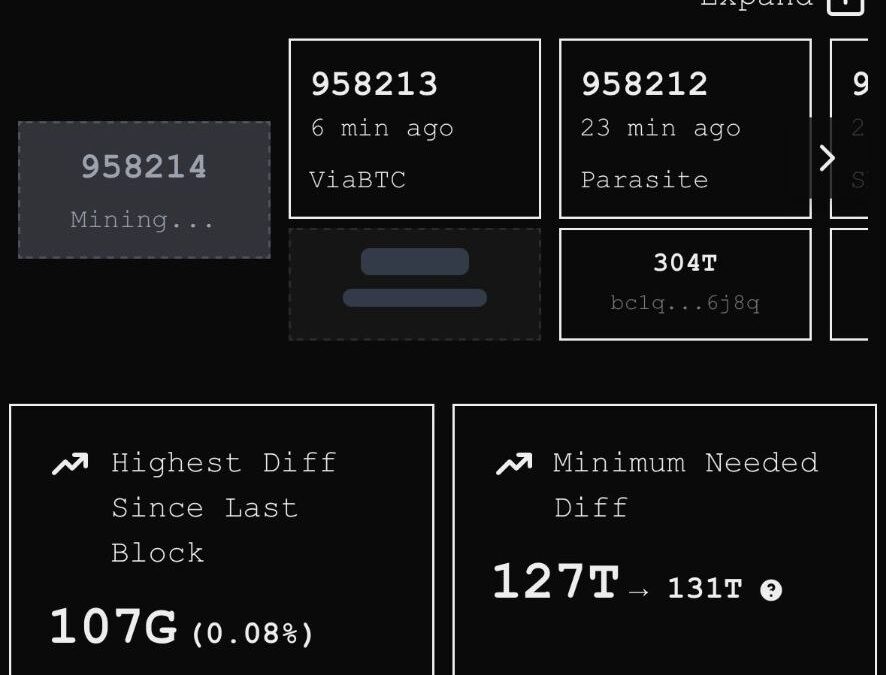

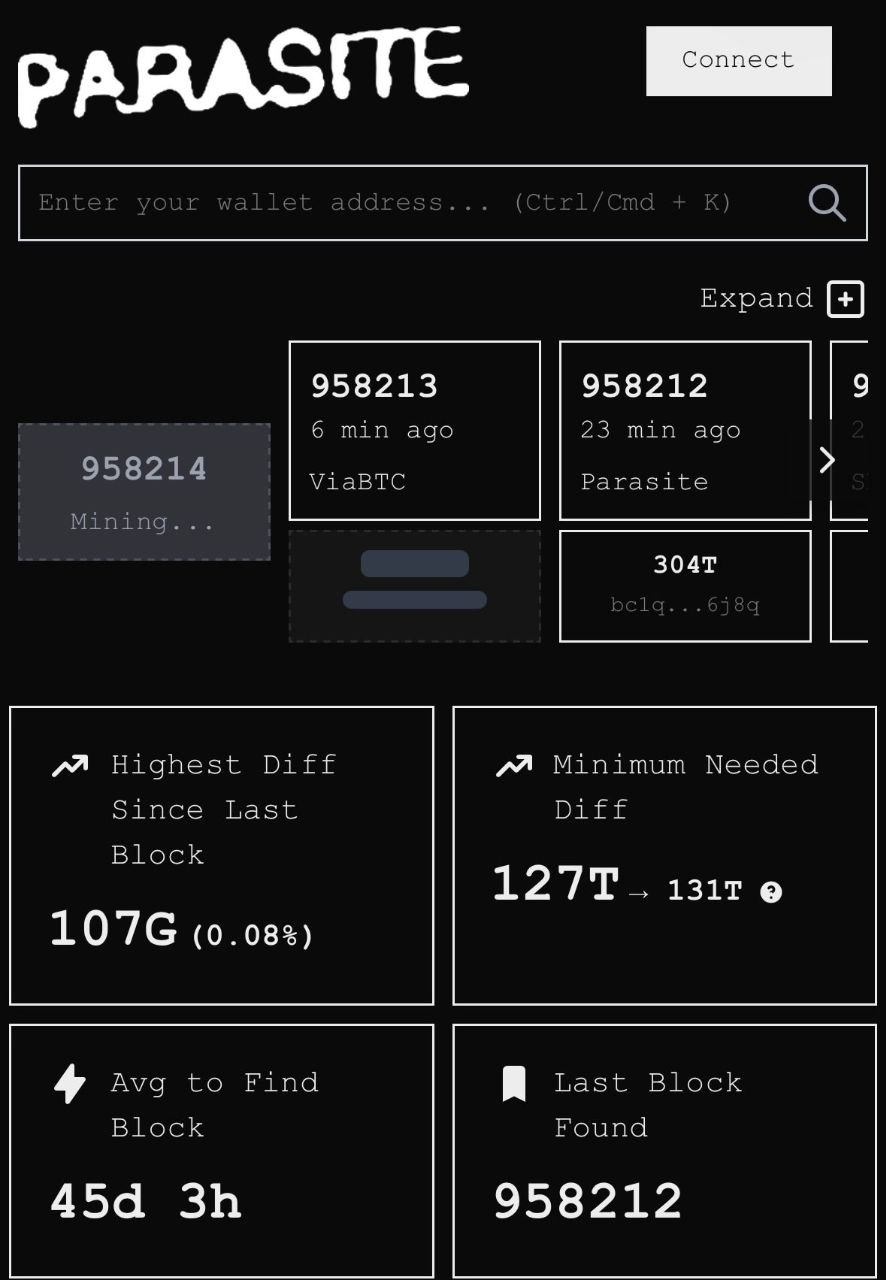
A new Bitcoin mining pool called “Parasite” is gaining hashrate with a radical model: when the pool discovers a block, the finder receives a fixed 1 BTC bonus, while the remaining 2.125 block reward (plus fees) is distributed to other participants via the Lightning Network.
This is a fundamental shift in how mining pools operate. And it might change everything.
How Parasite Works
- Block finder bonus: 1 BTC fixed reward to whoever finds the block
- Remaining reward: ~2.125 BTC distributed to other pool participants
- Distribution method: Lightning Network — instant, low-fee payouts
- Current block: Mining block 958,214
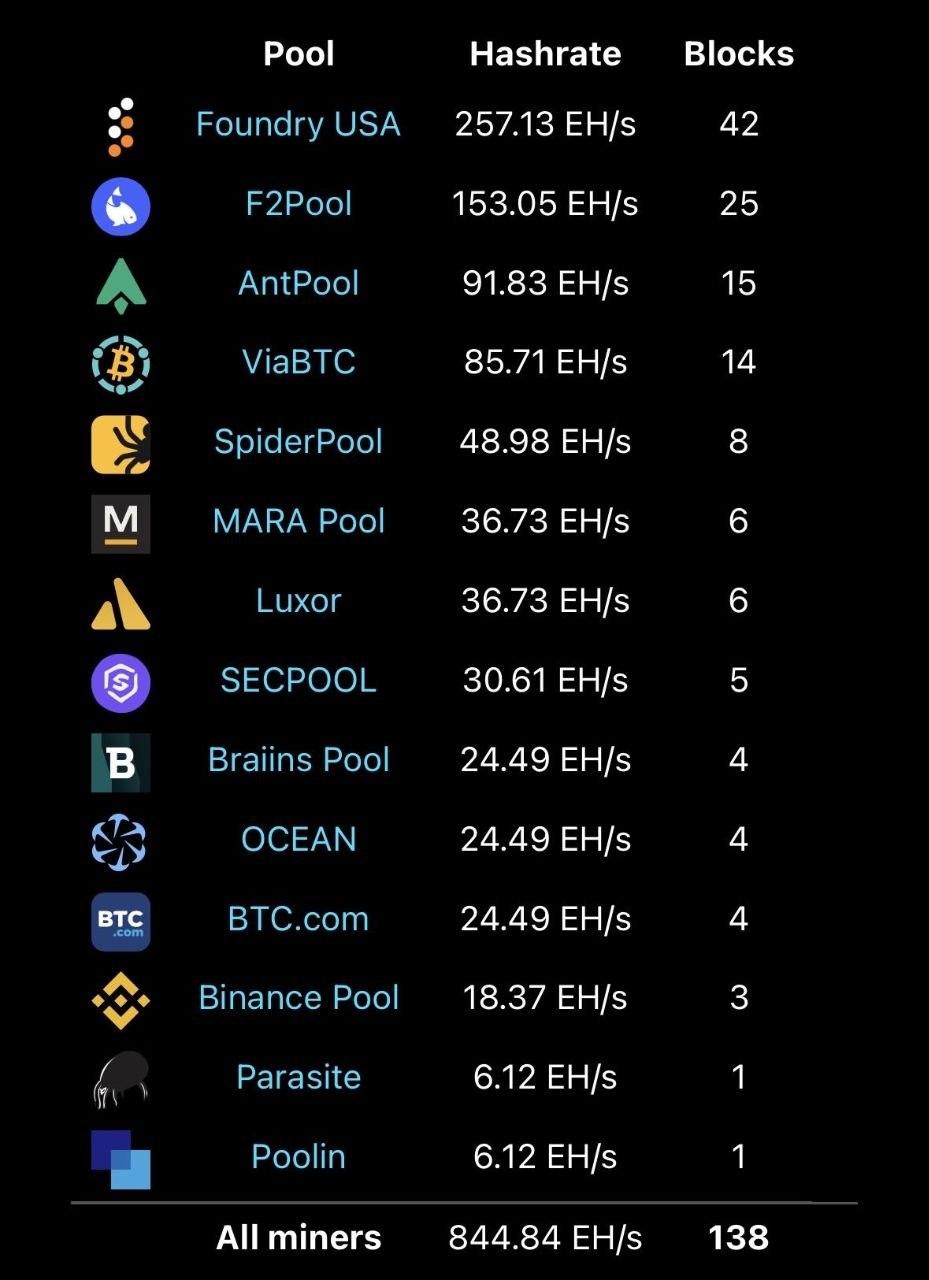
Current mining pool distribution — Foundry leads at 257 EH/s, F2Pool at 153 EH/s. Parasite is entering this landscape.
Why This Matters
Traditional mining pools distribute rewards proportionally to hashrate contributed. If you contribute 1% of the pool’s hashrate, you get 1% of the rewards. Fair, but boring.
Parasite flips the model. It turns mining into a lottery within the pool. The finder gets a massive 1 BTC bonus — life-changing money for a solo miner. The rest of the pool gets paid out via Lightning, which means instant settlement and no waiting for confirmations.
This creates a powerful incentive structure:
- Solo miners are incentivized to join because they could hit the 1 BTC jackpot
- Large miners are incentivized because Lightning payouts mean immediate liquidity
- The network benefits from more distributed hashrate
The Lightning Connection
Parasite’s use of Lightning Network for reward distribution is notable. Most pools pay out on-chain, which means transaction fees and confirmation delays. Lightning allows instant, near-zero fee payouts.
This is the first mining pool to natively integrate Lightning for reward distribution. If it works, expect other pools to follow.
The Mining Landscape
The current mining pool distribution shows:
- Foundry USA dominates with 257 EH/s (42 blocks)
- F2Pool second at 153 EH/s (25 blocks)
- AntPool third at 91.8 EH/s (15 blocks)
- ViaBTC at 85.7 EH/s (14 blocks)
- Smaller pools like SpiderPool, MARA, Luxor, SECPOOL, Braiins, and OCEAN fill out the rest
Parasite enters a market where the top 3 pools control over 50% of hashrate. Its differentiator is the bonus structure and Lightning integration — not raw hashrate.
What This Means For Bitcoin
More mining pool competition is good for Bitcoin. It decentralizes hashrate distribution and reduces the risk of any single pool gaining too much power.
Parasite’s model also makes solo mining more accessible. Small miners who couldn’t compete in proportional pools now have a shot at the 1 BTC bonus. Even if they never hit a block, they still get Lightning payouts for their contributed hashrate.
Will Parasite disrupt the mining industry? Too early to tell. But it’s the most interesting innovation in mining pool design since the invention of PPLNS.
Point Your Bitaxe to Parasite
If you own a Bitaxe — and you should — point it at Parasite pool. Here’s why:
- The 1 BTC bonus: Your 1 TH/s Bitaxe has the same chance of finding a block as anyone else’s hash. Hit it and you get 1 BTC instantly.
- Lightning payouts: Even your small hashrate earns rewards paid instantly via Lightning. No minimum threshold. No waiting.
- Support decentralization: Every hash you contribute to Parasite takes power away from the mega-pools.
How to Point Your Bitaxe to Parasite
- Buy a Bitaxe at loveisbitcoin.com/bitaxe
- Plug it into USB-C power and connect to WiFi
- Access the web interface (check your router for the IP)
- Enter the Parasite pool URL and your Bitcoin wallet address
- Start mining — your hashrate contributes immediately
That’s it. A $150 device. A few clicks. And you’re competing for 1 BTC bonuses while earning Lightning payouts on every hash you submit.
Place it on your desk. Plug it in. Forget about it. Maybe you get lucky. Maybe you don’t. Either way, you’re helping decentralize the network.
Keep an eye on block 958,214. That’s where Parasite is mining right now.