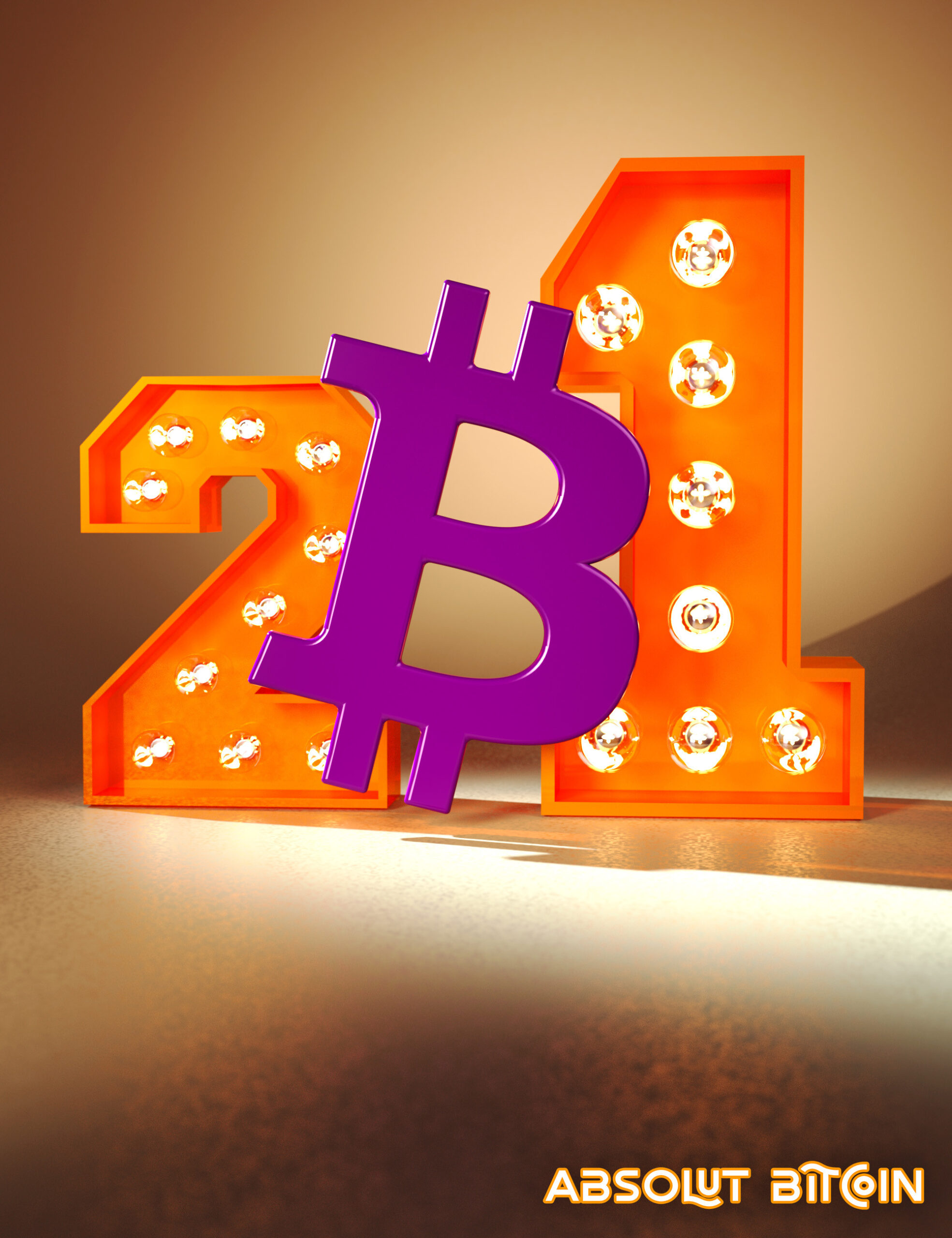

Quick Summary
- Eli Ben-Sasson — Zcash co-founder, ZK-STARK inventor, and CEO of StarkWare — publicly attacked Bitcoin’s 21 million supply cap on July 7, 2026
- He argued that lost private keys will shrink effective supply over centuries and proposed a 4% annual inflation rate instead of a hard cap
- The Bitcoin community erupted: replies ranged from polite disagreement to "GFY" and accusations of working for the CIA
- Ben-Sasson later walked back, saying increasing inflation "is not a hill I’d die on"
- This is the second major Bitcoin governance attack in weeks, following the ongoing BIP-110 civil war
What Happened
On July 7, 2026, Eli Ben-Sasson — a legitimate heavyweight in cryptography who co-founded Zcash, invented ZK-STARKs, and now runs StarkWare — posted what can only be described as a declaration of war on Bitcoin’s most sacred rule.
His argument? The 21 million supply cap "doesn’t make sense." Because private keys get lost over time, he claims the effective supply will shrink toward zero on very long timescales. His solution: replace the fixed 21M hard cap with a maximum 4% annual inflation rate.
"Capping the supply of Bitcoin at 21M doesn’t make sense. Because over time, keys will be lost. In fact, as time goes to infinity, all keys will be lost," Ben-Sasson wrote. "I strongly support a clear monetary policy with an absolute upper bound on the number of Bitcoins in the future. Say, fix a max issuance rate and you get that (a good choice is 4% a year)."
The Bitcoin community did not take this well.
Responses ranged from patient explanations of why lost coins are a feature (not a bug) to outright hostility. Some called him out for building a competing crypto (Zcash has its own 21M cap, by the way) and then trying to change Bitcoin’s rules. Others accused him of being a CIA plant or worse.
To his credit, Ben-Sasson later clarified that this "is not a hill I’d die on" and wished people would pay more attention to his support for op_CAT and post-quantum security upgrades instead.
But the damage was done. The question had been asked: what if Bitcoin’s 21 million cap isn’t sacred?
Why This Matters for Bitcoin
The 21 million supply cap is not just a number. It is Bitcoin’s entire value proposition.
Every other asset in human history — gold, dollars, real estate, stocks — has infinite supply. Central banks print more. Miners dig more. Companies issue more. Bitcoin is the FIRST asset in history with a mathematically guaranteed absolute supply limit.
Change that, and Bitcoin becomes… everything else. Just another fiat currency with a fancy ledger.
The timing matters too. This attack comes while Bitcoin is already fighting a civil war over BIP-110, a proposal that would invalidate valid transactions in the name of "spam reduction." Two existential governance fights at the same time? That’s not a coincidence. That’s a coordinated assault on Bitcoin’s foundations.
Here’s what Ben-Sasson and his supporters don’t understand: lost coins are not a bug. They are a donation to every remaining holder. The 2.1 quadrillion satoshis already minted provide more than enough divisibility for any future economy. And if 21M becomes too scarce? Bitcoin can divide further. That’s what decimal places are for.
The 21 million cap is immutable. That’s the point. For the first time in monetary history, nobody can print more.
The Love Is Bitcoin Takeaway
A Zcash founder wants to change Bitcoin’s supply cap. Read that sentence again.
Zcash, the privacy coin that had an inflation bug in 2018 that silently minted millions of coins. Zcash, which already targets a 21M cap like Bitcoin but has struggled with trust and adoption. The same crowd that can’t secure their own supply protocol wants to lecture Bitcoin about monetary policy?
This isn’t about technical merit. It’s about a competing protocol trying to rewrite Bitcoin’s rules through intellectual pressure — if they can’t beat Bitcoin in the market, they’ll try to change Bitcoin from within.
The lesson is clear: Bitcoin’s social contract is only as strong as the people who defend it. And right now, the defenders are holding the line. Learn how to self-custody your Bitcoin — because when the governance wars get hot, the only coins you truly control are the ones in your own wallet.
What Beginners Should Do Next
- Understand why 21 million Bitcoin is hard-coded: read about Bitcoin’s monetary policy
- Learn the difference between Bitcoin and other cryptocurrencies — they are NOT the same thing
- Self-custody your coins: if you don’t hold the keys, the governance debate doesn’t matter because you don’t actually own Bitcoin
- Ignore the noise: Bitcoin has survived existential threats before. The 21M cap will survive this one too.
FAQ
Can Bitcoin’s 21 million cap actually be changed?
Technically, a hard fork could change the supply cap. But the social consensus required is effectively impossible. The entire Bitcoin ecosystem — miners, nodes, exchanges, users — would need to agree. They won’t.
What happens if Bitcoin’s cap is increased to allow 4% annual inflation?
Bitcoin would lose its core value proposition as the first scarce digital asset. It would effectively become a fiat currency with a 4% debasement rate. The price would almost certainly collapse.
Are lost Bitcoin coins really a problem?
Lost coins reduce the effective supply, making remaining coins more valuable. This is a feature, not a bug. Satoshi estimated that lost coins make Bitcoin "more valuable to everyone."
Does Zcash have the same 21 million cap?
Yes, Zcash targets 21 million coins total — ironic, given that Ben-Sasson now criticizes Bitcoin for the same design choice his own project made.
Isn’t 4% inflation better than deflation from lost keys?
Inflation is a hidden tax on savers. Bitcoin’s deflationary nature (when accounting for lost keys) rewards saving and long-term thinking. Reintroducing inflation would make Bitcoin behave like every other currency.
What is self-custody and why does it matter for governance debates?
Self-custody means you hold your own private keys. When exchanges, ETFs, or corporate treasuries are caught in governance crossfire, the actual Bitcoin belongs to the key holder — not a custodian. Read our guide to choosing a Bitcoin wallet.
Is this financial advice?
No. This article is for education only and is not financial advice.
Final Thoughts
Eli Ben-Sasson is brilliant. ZK-STARKs are legitimately important technology. But being good at cryptography doesn’t mean you understand Bitcoin’s monetary sociology.
The 21 million cap is not a technical bug to be patched. It is the most important monetary innovation since the invention of gold. It is the reason Bitcoin works. And it will not be changed by a Zcash co-founder’s Twitter thread.
Bitcoin’s supply cap will survive this attack like it has survived every other. But the fact that it keeps getting attacked should tell you something: the enemies of sound money never stop trying. Use coupon code LOVEISBITCOIN at loveisbitcoin.com/bull to support independent Bitcoin education.
Should Bitcoin’s 21 million cap ever be changed, or is it truly untouchable? Drop your answer in the comments — we want to hear where you draw the line.
This article is for education only and is not financial advice.