
Quick Summary
- Bitcoin spot ETFs saw $1.257 billion in net outflows last week — the largest since January 2026
- Ethereum ETFs also bled ~$216 million in the same period
- Meanwhile, the DRAM Memory Chip ETF (ticker: DRAM) became the fastest-growing ETF in history, hitting $10 billion in AUM in just 30 trading sessions — breaking BlackRock’s IBIT Bitcoin ETF record
- DRAM surged 84%+ since its April 2 launch as Wall Street pivoted to AI infrastructure bets
- Hyperliquid’s HYPE token funds bucked the trend with $72.38 million in inflows
What Happened
Last week was brutal for Bitcoin ETFs. According to data from Farside Investors, the eleven U.S. spot Bitcoin ETFs collectively lost $1.257 billion — their worst week since January 2026. The outflows signal that institutional appetite for Bitcoin exposure through traditional finance products is cooling, at least for now.
Ethereum ETFs didn’t fare much better, posting roughly $216 million in net outflows over the same stretch.
What makes this story interesting isn’t just the numbers. It’s where the money went.
The DRAM Memory Chip ETF launched on April 2 and has been on an absolute tear. It hit $6.5 billion in assets in just 27 trading sessions — beating the previous record held by BlackRock’s IBIT Bitcoin ETF (30 sessions). Within 30 sessions, it had topped $10 billion. The fund has surged more than 84% since launch and is now one of the top 10 U.S. ETFs by year-to-date inflows out of more than 5,000 listed funds.
Wall Street, in other words, found a new shiny thing. And it rotated out of Bitcoin to chase it.
Not every crypto fund suffered. Solana spot ETFs pulled in $15 million. XRP ETFs added $22 million. And Hyperliquid’s HYPE funds attracted $72.38 million in inflows — reflected in a 40% token price surge. But the Bitcoin ETFs, specifically, took the biggest hit.
The data comes from Farside Investors, and was reported by George Georgiev at CryptoPotato on May 25, 2026.
Why This Matters for Bitcoin
This is a textbook example of why Wall Street’s relationship with Bitcoin is not the same as your relationship with Bitcoin.
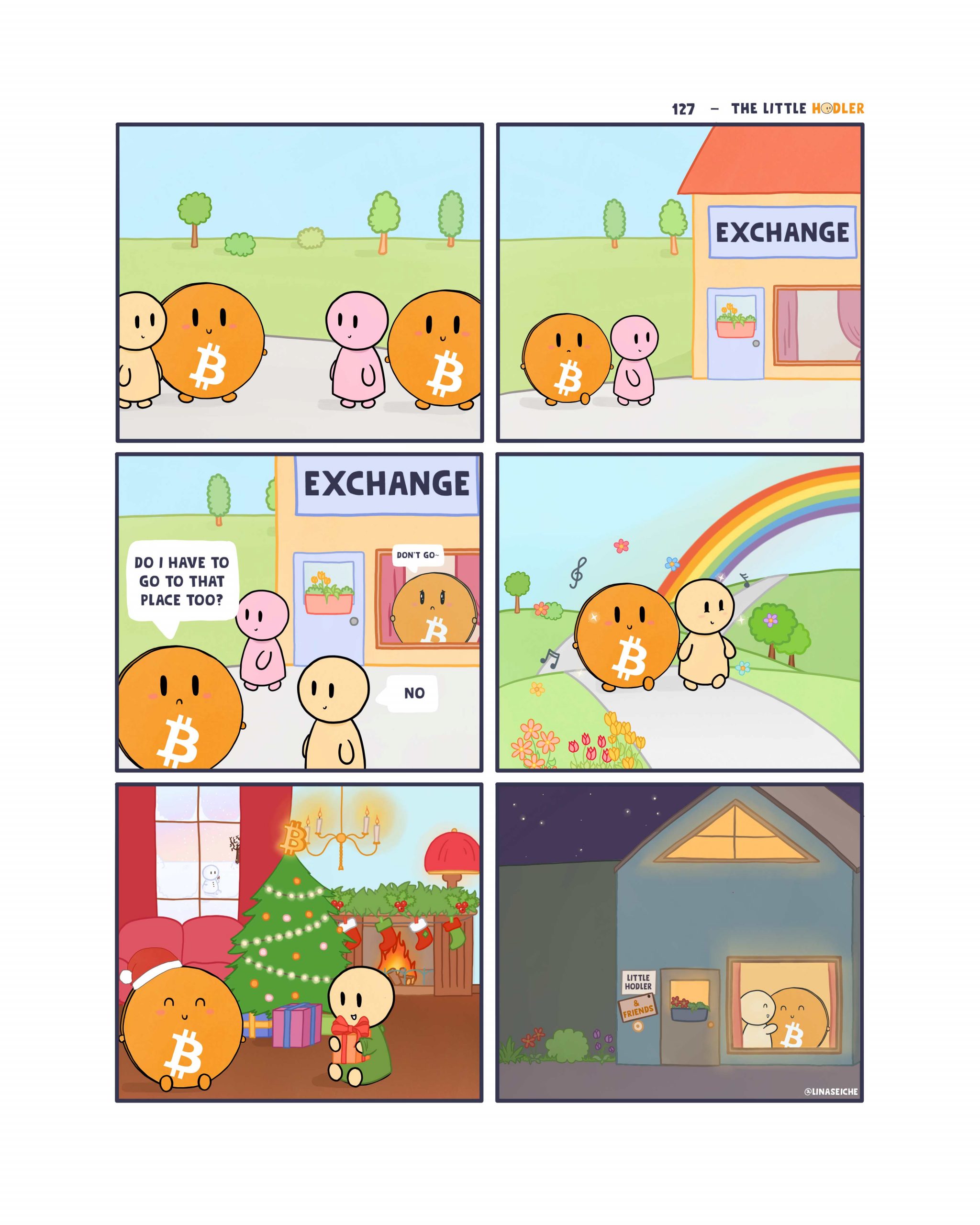
When you buy a Bitcoin ETF, you’re buying a tradable security that a fund manager can sell whenever they want. You’re not holding the keys. You’re not a long-term hodler. You’re a position on a balance sheet — one that gets liquidated the moment a hotter trade comes along.
And a hotter trade always comes along.
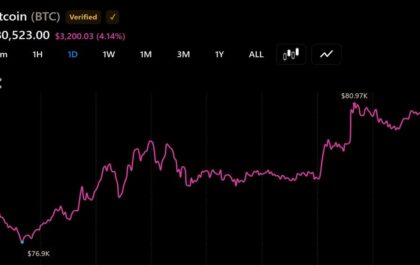
The DRAM Memory Chip ETF is up 84% in less than two months. That kind of return grabs attention on Wall Street, where quarterly performance is what matters. Bitcoin, meanwhile, has been ranging between $74,000 and $78,000 — consolidating, not mooning. So the capital moved.
That’s what institutions do. They chase returns. They rotate sectors. They have obligations to their shareholders that override any "conviction."
This is not the same as buying Bitcoin because you understand it as a savings technology. It’s not the same as holding your own keys through a bear market. It’s not the same as stacking sats month after month because you believe in a fixed-supply, decentralized monetary asset.
Read our guide: Spot Bitcoin ETFs & Self-Custody
Bitcoin ETFs are a product. A wrapper. A way for Wall Street to trade Bitcoin without ever touching it. And when the next hot product comes along — whether it’s memory chips, AI, or zero-day options on banana futures — that capital will leave without a second thought.
The Love Is Bitcoin Takeaway
Every time Bitcoin ETF flows hit a record, commentators cheer. "Institutional adoption!" they shout. And every time those same ETFs see outflows, the tone shifts. "Institutions are losing interest in Bitcoin."
Both takes miss the point.
The institutions were never really interested in Bitcoin — they were interested in Bitcoin exposure. There’s a difference. One is about understanding sound money principles, learning self-custody, and long-term conviction. The other is about having a line item in a portfolio that says "crypto."
When BlackRock launched IBIT, it was the fastest-growing ETF in history. Now a memory chip fund holds that title. Next year it’ll be something else — quantum computing, space mining, AI-powered toothbrushes. Wall Street loves a narrative.
But Bitcoin doesn’t need Wall Street’s narrative. Bitcoin needs people who understand what they own and why they own it. People who can’t be rotated out of because the next hot thing came along. People who hold their own keys.
The $1.25 billion that left Bitcoin ETFs last week didn’t leave Bitcoin. It left products that track Bitcoin’s price. The actual Bitcoin on the network is still there, still secured by proof-of-work, still governed by the same consensus rules it had when it launched.
That’s the difference between owning the asset and renting the exposure.
What Beginners Should Do Next
- Understand the difference between a Bitcoin ETF and real Bitcoin. An ETF is a paper claim on the price. Real Bitcoin is a bearer asset you control with your own private keys. They are not the same thing.
- Learn how self-custody works. If you can’t withdraw it, you don’t own it. A hardware wallet or a well-secured software wallet gives you control that no ETF can offer.
- Read about the difference between custodial and non-custodial wallets. Companies like Coinbase, exchanges, and ETF providers hold your Bitcoin for you. That is custodial. When they decide to sell, or go bankrupt, or get hacked, your exposure disappears. Not your keys, not your coins.
- Understand that institutional money is not loyal. Wall Street follows the narrative. It tracked Bitcoin ETFs in 2024-25, then pivoted to AI and memory chips in 2026. Next year it’ll be something else. Your conviction should come from understanding, not from watching fund flows.
- Start with education before chasing price action. The best time to learn about Bitcoin and self-custody is before a bear market, not during it.
Compare Bitcoin ETFs with real Bitcoin in our beginner guide
FAQ
Why did Bitcoin ETFs have massive outflows this week?
Institutional investors rotated capital out of Bitcoin ETFs and into the DRAM Memory Chip ETF, which has surged 84% since its April 2 launch. The DRAM ETF became the fastest-growing fund in history, drawing $10 billion in assets in just 30 trading sessions.
Does this mean institutions are abandoning Bitcoin?
No — it means they’re trading Bitcoin exposure like any other asset class. Institutional money chases returns. Bitcoin consolidation ($74k–$78k) is less attractive than a memory chip ETF up 84% in two months. This is normal behavior for Wall Street, not a verdict on Bitcoin itself.
Are Bitcoin ETFs the same as owning real Bitcoin?
No. A Bitcoin ETF is a financial product that tracks Bitcoin’s price. You don’t hold the private keys. You can’t withdraw the Bitcoin to your own wallet. You own a share in a trust, not the asset itself.
Can you withdraw Bitcoin from an ETF?
No. Spot Bitcoin ETFs do not allow redemptions in actual Bitcoin for retail investors. Only authorized participants (large financial institutions) can create or redeem ETF shares, and even then, the process is custodial.
Is the DRAM Memory Chip ETF better than a Bitcoin ETF?
That depends on your goals. If you want short-term exposure to the AI/memory chip trade, DRAM has outperformed. But if you want long-term exposure to a fixed-supply, decentralized monetary asset, that’s what Bitcoin is for — and self-custody is the way to get it.
Should beginners buy Bitcoin ETFs or real Bitcoin?
This is not financial advice, but the difference matters. ETFs are convenient but custodial. Real Bitcoin requires learning self-custody but gives you full control. Beginners who understand the trade-off can make an informed choice — but the Love Is Bitcoin view is that learning self-custody is worth the effort.
Is this good or bad for Bitcoin adoption?
Both. ETF flows bring mainstream attention and price appreciation, which helps adoption. But they also create a false sense of "ownership" — people think they own Bitcoin when they really own a Wall Street product that can be sold out from under them. Real adoption happens when people hold their own keys.
What is self-custody?
Self-custody means holding your own Bitcoin private keys rather than trusting a third party (exchange, bank, ETF provider) to hold them for you. With self-custody, only you can move your Bitcoin. It’s the fundamental principle behind "not your keys, not your coins."
Final Thoughts
The $1.25 billion outflow from Bitcoin ETFs is not a crisis. It’s a reality check. It reveals that institutional money was never "in it" the way true Bitcoiners are. It was a trade, not a conviction.
The good news? None of this affects the Bitcoin network itself. The protocol doesn’t care about ETF flows. The fixed supply doesn’t change based on Wall Street’s latest obsession. The 21 million cap is still 21 million.
The question for every Bitcoin-curious person is simple: do you want to own Bitcoin, or do you want to rent exposure to its price? One requires learning how self-custody works. The other requires a brokerage account and a willingness to watch your "Bitcoin" get sold when the next shiny thing comes along.
The choice has never been clearer.
This article is for education only and is not financial advice.