
Quick Summary
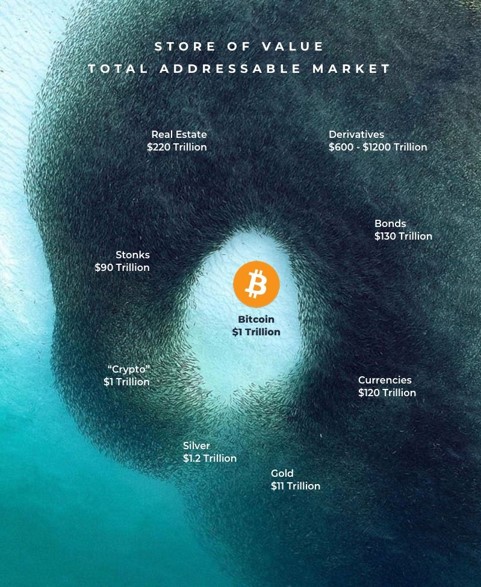
- BlackRock ($14 trillion AUM) officially posted on June 23 that investors should allocate "typically ~1-2%" of their portfolio to Bitcoin
- The post calls Bitcoin "a complementary diversifier" that "could impact return potential"
- This comes from the same firm that charges 0.25% annually on its spot Bitcoin ETF (IBIT)
- Market reaction: Bitcoin trading in the low $60K range, down 35% from all-time highs
- The real question: who benefits more from this advice — you or BlackRock?
What Happened
On June 23, 2026, BlackRock’s official X account — the corporate voice of a firm managing more money than most countries’ GDP — posted this:
"Bitcoin’s role in portfolios is evolving, and it could be considered a complementary diversifier. We believe a modest allocation (typically ~1-2%) could impact return potential in a portfolio while maintaining appropriate risk tolerance."
The post included a video featuring Michael Gates, a BlackRock executive, discussing Bitcoin’s "unique properties" and "diversification benefits."
Bitcoin Magazine immediately amplified it. Crypto Twitter cheered. The price… did nothing.
Why This Matters for Bitcoin
Here’s what BlackRock didn’t say:
They didn’t say buy Bitcoin, hold your own keys, learn how the network works, or secure your stack against confiscation.
They said buy our ETF. Pay us 0.25% a year. Trust us with your coins.
BlackRock doesn’t want you to understand Bitcoin. They want you to buy exposure to Bitcoin through their products — the same way you’d buy a S&P 500 index fund. They want the fees, the AUM growth, and the Wall Street narrative that Bitcoin needs middlemen.
Because here’s the thing: if every BlackRock client actually learned self-custody and withdrew their Bitcoin from IBIT, BlackRock would lose billions in annual fee revenue. Their incentive is the opposite of Satoshi’s vision.
The Love Is Bitcoin Takeaway
Let’s be real — BlackRock endorsing Bitcoin is a massive deal. A firm with $14 trillion telling its clients to put 1-2% into Bitcoin means potentially $140-$280 billion in new demand. That’s price-moving money.
But BlackRock’s version of "Bitcoin" is a paper IOU backed by Coinbase custody, not the real thing. It’s Bitcoin with training wheels — and BlackRock controls the handlebars.
The lesson has always been the same: take the institutional validation as confirmation that you’re early, not late. But don’t confuse "BlackRock approved Bitcoin" with "Wall Street will teach you Bitcoin."
Wall Street wants to sell you Bitcoin without showing you how it works. Learn the difference between owning an ETF and owning your keys. One makes BlackRock richer. The other makes you sovereign.
And that 1-2% number? It’s designed to be small enough that Wall Street traditionalists don’t panic, but big enough to generate $350 million in annual fees for BlackRock at scale. You do the math.
What Beginners Should Do Next
- If you bought IBIT or any Bitcoin ETF: learn to withdraw to your own wallet
- Read our guide on choosing a Bitcoin wallet and why self-custody matters
- Understand that 1% in an ETF is not the same as understanding Bitcoin
- The best time to learn self-custody is before the next exchange crisis, not after
FAQ
Is BlackRock recommending Bitcoin?
Yes — they recommend 1-2% of a portfolio as a "complementary diversifier."
Can you buy real Bitcoin through BlackRock?
No — you buy IBIT, a spot Bitcoin ETF. BlackRock’s custodian (Coinbase) holds the actual Bitcoin.
Can you withdraw Bitcoin from BlackRock’s ETF?
No — ETF shares can be sold for cash, but you cannot withdraw physical Bitcoin.
Is this good for Bitcoin adoption?
It’s complicated. It brings institutional money and legitimacy, but it creates a generation of "Bitcoin owners" who have never touched a wallet or learned a seed phrase.
What is self-custody?
Self-custody means holding your own private keys — the only way to truly own Bitcoin without a middleman who can freeze, seize, or lose your coins.
Should beginners use a brokerage or a Bitcoin wallet?
A Bitcoin wallet. Learn the basics before adding complexity. ETFs are for people who don’t want to learn — but Bitcoin rewards those who do.
Final Thoughts
BlackRock saying "buy Bitcoin" is a milestone. But their version of Bitcoin is a sanitized, custody-wrapped, fee-generating product — not the permissionless, sovereign money that Satoshi described.
The best response to BlackRock’s 1-2% allocation advice? Allocate 100% of your Bitcoin education.
This article is for education only and is not financial advice.