
Quick Summary
- Microsoft walked away from a planned UK AI data center run by Nscale — a company spun out of bitcoin mining — after the local grid operator told it there may not be enough power until the early-to-mid 2030s.
- The site at Loughton, Essex, about six miles northeast of London, was supposed to house 23,040 Nvidia chips and deliver 50 megawatts of computing to Microsoft’s Azure cloud by early 2027. When the Guardian visited in February, it was still a working scaffolding yard.
- Public miners have announced more than $70 billion in AI and high-performance computing contracts — and have cut their combined bitcoin holdings by more than 15,000 BTC from their peaks, partly by selling coins to pay for the buildout.
- CoinShares counts more than 4 gigawatts of AI capacity under contract across the miners it tracks. Only about 550 megawatts is actually billing customers. Contract backlogs top $100 billion. Annualized AI revenue is just over $1 billion.
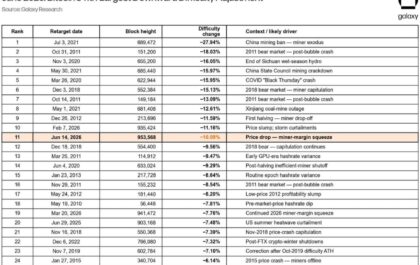
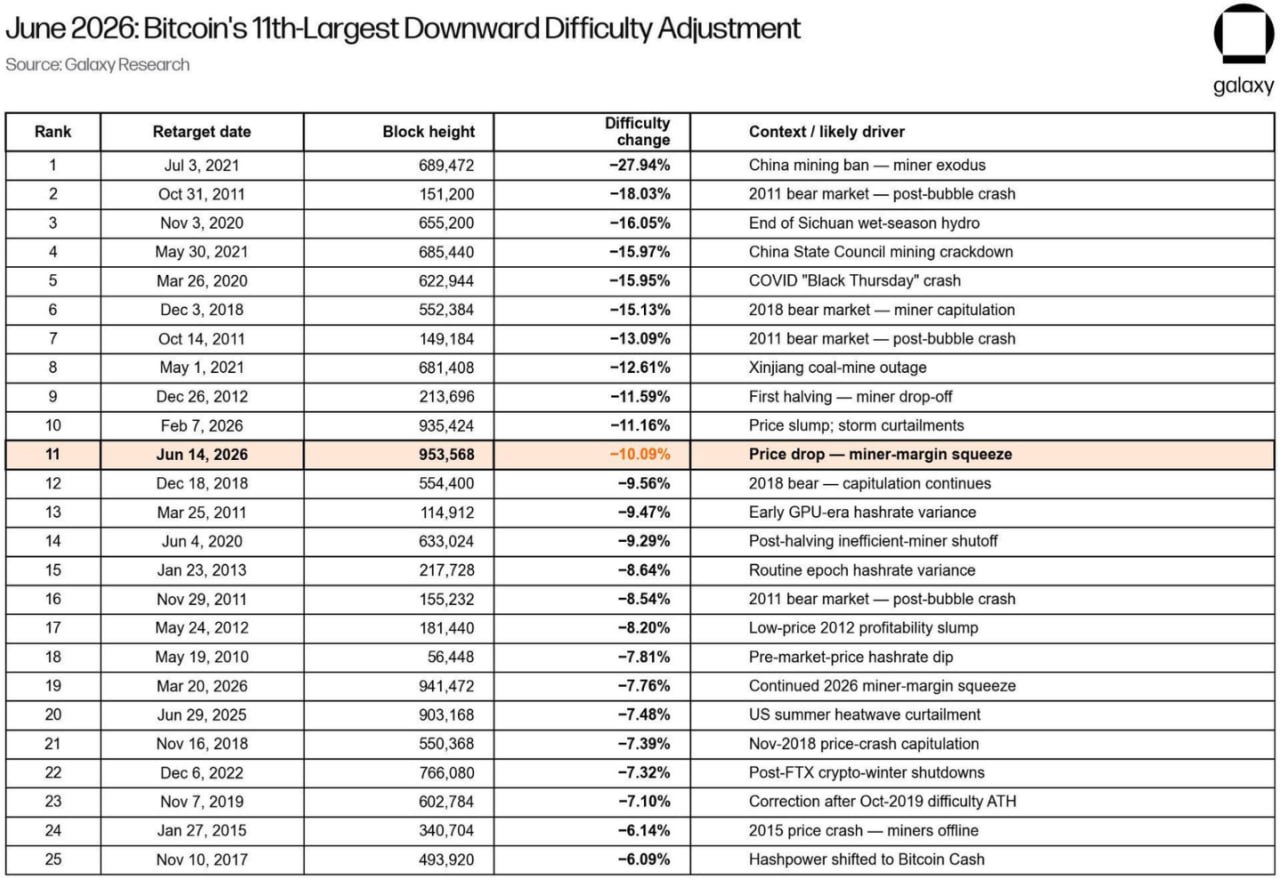
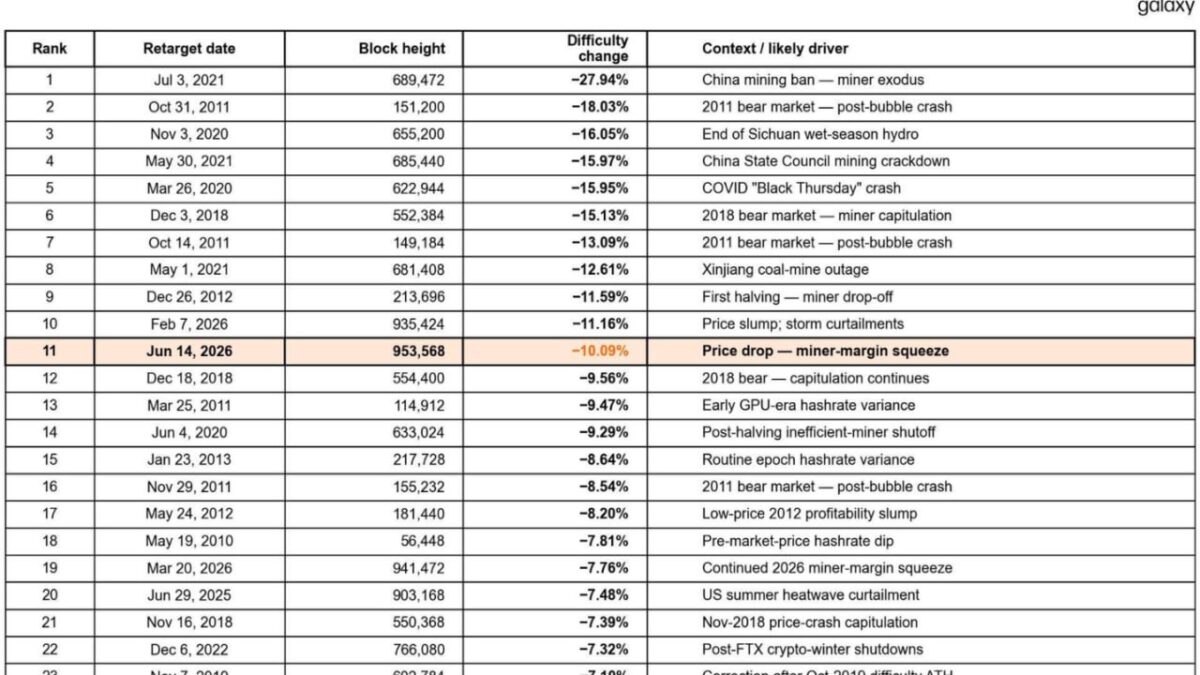
- Bitcoin is trading near $82,500, and the most recent difficulty retarget made mining roughly 5.9% harder. Meanwhile on-chain trackers flagged the largest listed miner moving about 1,000 BTC to exchanges this month.
What Happened
Microsoft walked away from a planned UK AI data center run by Nscale, a company spun out of bitcoin mining, after the local grid operator said the site may not be powered for a decade.
The facility was supposed to be a flagship. Twenty-three thousand and forty Nvidia chips, 50 megawatts of computing sold to Microsoft’s Azure cloud, live by early 2027. Nscale announced the project last year alongside Microsoft, Nvidia and OpenAI. When the Guardian visited the Loughton site in February, it was still a scaffolding yard.
Then UK Power Networks, which runs the local grid, delivered the sentence that kills projects: there may not be enough capacity until the early-to-mid 2030s. Microsoft left. Nscale cleared the site and is now hunting for power elsewhere. It says its other Microsoft contracts remain in place.
This is not a small company failing. Nscale grew out of Arkon Energy, which built sites for bitcoin mining. Its founder, Josh Payne, took the exact skill set miners spent a decade developing — locking down land and power — and sold it to AI companies. Much of the listed mining industry has been running that same playbook.
And the numbers behind that playbook were always worse than the pitch. When CoinDesk looked at the industry shift in March, public miners had announced more than $70 billion in AI and high-performance computing contracts. They had also cut their combined bitcoin holdings by more than 15,000 BTC from their peaks, partly by selling coins to pay for the buildout. Mining was already squeezed then: the average listed miner’s cash cost to produce one bitcoin was near $80,000 in the fourth quarter of 2025, while bitcoin traded around $70,000 in March.
Here is the part nobody puts in the investor deck. An AI-ready facility costs roughly $8 million to $15 million per megawatt to build. A bitcoin mining site costs about $700,000 to $1 million per megawatt. AI customers also expect the servers to run around the clock, and the money takes years to arrive. In its latest mining report, CoinShares counted more than 4 gigawatts of AI capacity under contract across the miners it tracks — with only about 550 megawatts actually billing customers. Contract backlogs topped $100 billion. Annualized AI revenue stood at just over $1 billion.
A hundred billion dollars of promised contracts. One billion dollars of actual revenue. That is a 100-to-1 ratio between the story and the business.
Britain’s grid queue tells the same story from the other side. Energy regulator Ofgem says data center projects have requested connections totaling about 73 gigawatts of demand — and it is weighing tougher rules precisely because some applicants may never build, which holds up the projects that are ready.
Meanwhile the network itself does not care about any of this. The most recent difficulty adjustment made mining about 5.9% harder. Bitcoin is trading near $82,500. And on-chain trackers flagged MARA, the biggest publicly listed miner, moving roughly 1,000 BTC — about $82.8 million — to exchanges during a shaky October, the kind of transfer that historically precedes selling.
Why This Matters for Bitcoin
Miners are not Bitcoin. This is the single most misunderstood thing in the entire industry, and it is the reason this story matters more than it looks.
Bitcoin’s rules are indifferent to miner pain. Difficulty adjusts every 2,016 blocks to keep block times near ten minutes. When hashrate falls, difficulty falls with it, and the miners who remain get a raise. When hashrate rises, difficulty rises and the marginal operator gets squeezed out. Nobody votes. Nobody lobbies Ofgem. The network self-corrects on a schedule, forever.
That is why the AI pivot was never really about Bitcoin’s problems. It was about corporate balance sheets. Public miners took on debt, bought machines at the top, and then discovered that producing one bitcoin cost them near $80,000 in cash. Selling coins to fund an AI data center is not a strategy for Bitcoin. It is a strategy for the miner’s share price.
And it changes who is holding. Every bitcoin a public miner sold to pay for a megawatt of AI capacity moved to somebody who did not need to sell it. That is the transfer. Not a crash. A handover.
The Love Is Bitcoin Takeaway
Here is what the last five years of miner behavior actually taught us, and almost nobody says it out loud: the people who secured the network were never the same as the people who held the coins. Miners are a business. They sell what they produce to pay their bills. That is not a betrayal — it is a job.
The mistake is treating a mining company’s press release like a signal about Bitcoin’s future. "Miners are capitulating" is not a Bitcoin problem. Miners capitulating is Tuesday. Difficulty falls, weaker operators die, stronger ones pick up the machines for cents on the dollar, and the chain keeps producing a block every ten minutes like nothing happened.
What the Nscale collapse exposes is something different: the escape route out of mining is narrower than the industry admitted. You cannot simply flip a mining site into an AI campus, because AI needs a grid connection that a decade of paperwork may not deliver. Miners sold their bitcoin for a promise. The promise just met a substation.
If you are holding bitcoin, this is not a bearish story. It is a clarifying one. The coins those miners sold are sitting in wallets that did not need the money. Bitcoin does not care about their stock price, their debt covenants, or their Microsoft contract. It only cares that somebody keeps producing blocks — and at 5.9% harder difficulty, somebody clearly is.
The real question is what happens to the miners’ balance sheets, not to Bitcoin. And that question has never once been answered on-chain.
What Beginners Should Do Next
- Understand what miners actually do. They convert electricity into blocks and sell the blocks to pay for the electricity. They are not long-term savers, and their selling is not a signal.
- Learn the difference between hashrate and price. Hashrate is the network’s security budget. Price is what the market will pay. They move on completely different clocks.
- Read the difficulty adjustment. Every two weeks, Bitcoin publicly and mechanically tells you whether it is getting easier or harder to mine. No other asset in the world publishes its own security budget in real time.
- If you want exposure to mining, learn what a hashprice is before you buy a mining stock. If you want exposure to Bitcoin, you do not need a miner at all. You need a wallet you control — start with our guide on choosing a Bitcoin wallet without getting rekt.
- If you want to mine anyway, you can do it at home now. Small, quiet, plug-and-play machines exist. See our Bitaxe home miner collection — and note that home mining is a hobby with a lottery ticket attached, not an income strategy.
FAQ
Why did Microsoft walk away from the Nscale data center?
The local grid operator, UK Power Networks, told Nscale there may not be enough electrical capacity at the Loughton site until the early-to-mid 2030s. Microsoft’s contract assumed the facility would be delivering 50 megawatts of Azure computing by early 2027.
Does this mean Bitcoin mining is dead?
No. Bitcoin mining difficulty adjusts automatically every 2,016 blocks. If miners leave, difficulty falls and the remaining miners earn more per unit of hashrate. That mechanism is why the network has survived every previous miner capitulation — including the one that already happened in the middle of 2026.
Why are bitcoin miners selling their BTC?
Because they are businesses with bills. CoinDesk reported that public miners cut combined holdings by more than 15,000 BTC from their peaks, partly to fund AI data center construction. An AI-ready facility costs roughly $8 million to $15 million per megawatt, versus $700,000 to $1 million for a bitcoin mining site.
Is $100 billion of AI contracts real?
It is real as a contract backlog. It is not real as revenue. CoinShares counted more than 4 gigawatts under contract across tracked miners, but only about 550 megawatts actually billing customers, and annualized AI revenue of just over $1 billion.
Should I sell my bitcoin because miners are selling?
That is a decision only you can make, and this article is not financial advice. What you can do is understand that miners and holders are different groups with different incentives. Miners sell because they must. Holders sell because they choose to.
What is difficulty and why does it matter?
Difficulty is the number that tells miners how much work is required to find a block. It rises when hashrate rises and falls when hashrate falls, always targeting a ten-minute block. The most recent retarget made mining about 5.9% harder. If miners quit, difficulty will follow them down.
Does Bitcoin need miners to survive?
Bitcoin needs hashrate to secure the chain, and it needs the difficulty adjustment to keep that hashrate honest. It does not need any specific miner, company, or country. That is the entire point — and it is why a $1.5 billion write-down of mining hardware was a corporate event, not a protocol event.
Is this financial advice?
No. This article is for education only.
Final Thoughts
The AI pivot was sold as miners growing up. What it actually was: miners selling the one asset that does not depreciate in order to buy an asset that does, on land that cannot get power until the 2030s.
Bitcoin does not need those miners to be right. It needs them to be replaced, and the difficulty adjustment guarantees that they will be — automatically, publicly, and without anyone’s permission. That is the difference between a network and a company. A company that loses its biggest customer can die. A network that loses its biggest miner just gets cheaper to secure.
So here is the question worth arguing about in the comments: if the miners sold 15,000 BTC to build AI data centers that may never be powered, who did those coins go to — and what does that say about who actually owns Bitcoin in 2026?
Stack sats, hold your own keys, and use the coupon code LOVEISBITCOIN when you buy bitcoin through Bull Bitcoin — non-custodial, no middleman, no permission required.
This article is for education only and is not financial advice.
BITCOIN MINERS SOLD 15,000 BTC TO ESCAPE INTO AI — MICROSOFT JUST WALKED AWAY, AND THE POWER WON'T BE READY UNTIL THE 2030s