
Quick Summary
- BitMEX — the exchange that helped invent the perpetual swap — stopped trading, deposits, and new positions on Tuesday after an 11-year run. (Source: CoinDesk, Sept 23, 2026)
- Withdrawals still work. For now. Customers can log in and pull their balances as the wind-down continues.
- But KYC-verified users who leave money behind now pay a monthly fee: 1% of their assets annualized, or a $50 minimum — whichever is greater.
- The closure was announced back in July after a strategic review by parent company HDR Global Trading, as BitMEX lost the derivatives market it created.
- BitMart also announced it was shutting down in July. Two exchanges dead in one summer.
What Happened
The exchange era just died. Again.
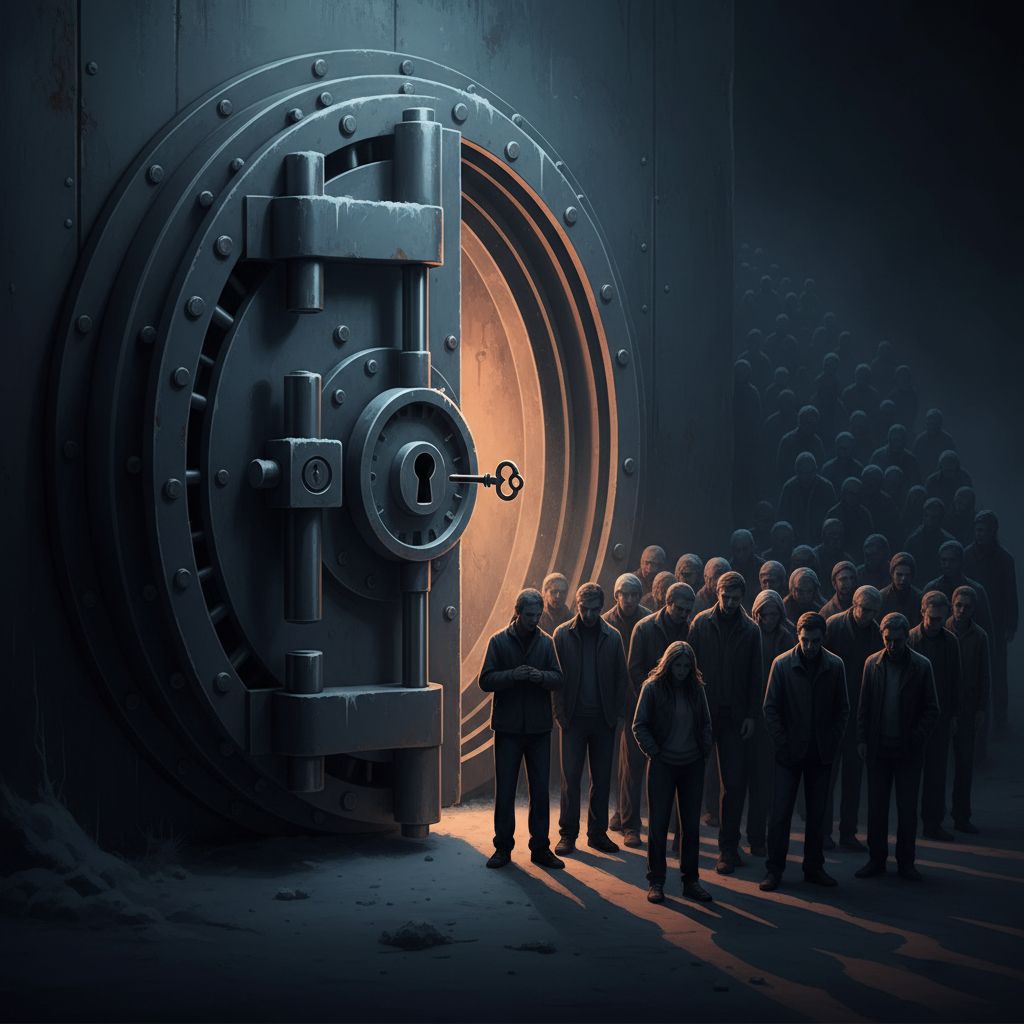
BitMEX, the platform that turned crypto into a leverage casino and made "perpetual futures" the most-traded instrument in digital assets, is no more. As of 04:00 UTC Tuesday, trading, deposits, and new positions are gone. The doors are locked except for one window: withdrawals.
Co-founded in 2014 by Arthur Hayes, Ben Delo, and Samuel Reed, BitMEX essentially invented the perpetual swap — the contract that now dominates crypto derivatives, with centralized exchange volume hitting $3.4 trillion in August alone (up to $50 trillion a year, by CoinDesk research). For a decade, this was the place where leveraged dreams went to die. You know the memes: the BitMEX liquidation waterfall, the cascade of red candles that made millionaires and wiped out everyone else.
It also carried one of crypto’s most famous government scalps. In 2020, the U.S. Department of Justice indicted its founders for failing to maintain anti-money-laundering controls — the case that ended with the company paying $100 million to settle.
So how does a pioneer die? Not by execution. By irrelevance. BitMEX announced in July that a strategic review by parent HDR Global Trading had concluded what everyone already knew: it had lost the perps market it created. Bigger, slicker, more compliant exchanges ate its lunch. The great-granddaddy of leverage became the buggy whip of crypto.
And now it’s a landlord. Verified customers who leave a balance on the platform get billed a monthly fee — 1% annualized on their assets, or a $50 minimum, whichever is higher. You are now paying rent to an exchange that no longer trades. Think about that.
Why This Matters for Bitcoin
Bitcoin doesn’t care. That’s the whole point. BitMEX was a centralized business with a lifespan, and like every centralized business, it had a last day on the calendar. The Bitcoin network doesn’t have one.
But here’s what matters: every exchange has an expiry date. Some you see coming, like this one. Some you don’t — like FTX, where the doors slammed shut overnight and customers woke up as unsecured creditors. BitMEX is the polite version: "please come get your coins, and by the way you’ll be charged for the privilege."
The pattern is not a pattern of exceptions. It’s the rule. Custodians fail. Exchanges fade. Businesses close. The only thing that never asked you to withdraw is the wallet you control yourself.
And notice what happened while BitMEX was dying: the derivatives market it invented hit $50 trillion a year. The casino got bigger. Bitcoin didn’t need BitMEX to survive — BitMEX needed Bitcoin to matter, and once the market matured, the pioneer became optional. Same thing is happening to every exchange you’re using right now.
The Love Is Bitcoin Takeaway
Never in the history of money has a storage service worked so hard to be replaced. BitMEX taught the world how to bet on Bitcoin. It forgot to teach you that the exchange was never the asset.
When an exchange dies, it doesn’t take Bitcoin with it. It takes your ability to access your Bitcoin without asking permission — and then it bills you for the asking. The $50-a-month fee isn’t the story. The story is that your money had a landlord at all. Real self-custody doesn’t send invoices. Real Bitcoin doesn’t have a wind-down process. Your seed phrase doesn’t have a strategic review.
The DOJ couldn’t kill the biggest leverage casino in crypto — the market did that. But the market couldn’t touch your coins either, if you never let an exchange hold them.
What Beginners Should Do Next
- Check where your Bitcoin is sitting right now. If it’s on an exchange, you are the customer of a business with an expiry date — not the owner of your coins.
- Learn the difference between holding Bitcoin on an exchange and holding it in a wallet you control.
- Withdraw. Test a small amount first, then the rest. The exchanges that die overnight don’t give notice; the ones that die politely charge you $50 a month to procrastinate.
- Get familiar with non-custodial wallets before you need them. Panic is a terrible teacher.
- If you still want leverage, remember: every leverage trade has two parties — you, and the exchange that will one day bill you for the privilege.
FAQ
Is BitMEX closing down?
Yes. Trading, deposits, and new positions stopped at 04:00 UTC on Tuesday, Sept 22, 2026. Withdrawals remain available during the wind-down.
Can I still get my money off BitMEX?
Yes — withdrawals are open. But BitMEX now charges KYC-verified users a monthly fee of 1% annualized on balances, or a $50 minimum, whichever is greater.
Why did BitMEX shut down?
Its parent, HDR Global Trading, announced in July that a strategic review found it had lost the derivatives market it helped create. BitMEX announced its closure at that time.
Did BitMEX users lose their funds?
BitMEX says this is not a freeze on customer assets and withdrawals remain available. Still, the fee structure is designed to make you leave — quickly.
Is Bitcoin affected by BitMEX shutting down?
No. The Bitcoin network is unaffected. BitMEX was a centralized business on top of Bitcoin, not Bitcoin itself.
Is BitMEX the first exchange to close?
No, and it won’t be the last. BitMart announced it was shutting down in July after nine years, and FTX collapsed overnight in 2022. Exchanges close; your keys don’t have to.
What should I do with Bitcoin on an exchange?
Withdraw it to a wallet you control. This is not financial advice — it’s self-preservation.
What is the safest way to store Bitcoin?
A non-custodial wallet where you hold the private keys — see our wallet guide for a threat-model-first approach.
Final Thoughts
BitMEX invented the instrument that made crypto famous and then got billed for existing. That’s not a tragedy — that’s a tutorial. Every exchange is a business, every business has a fin, and every coin you leave on someone else’s balance sheet is a coin you don’t actually own. The $50-a-month fee BitMEX is charging stragglers is the most honest pricing in finance: it’s the price of trusting a stranger with your money instead of yourself.
Want to buy Bitcoin the way it was meant to be bought — no custodial middleman taking a cut of your trust? Swap fiat for sats at Bull Bitcoin and use the coupon code LOVEISBITCOIN at https://loveisbitcoin.com/bull.
Your coins are on an exchange right now, aren’t they? When it sends you its version of the $50 monthly bill — because every exchange eventually does — what exactly are you paying for?