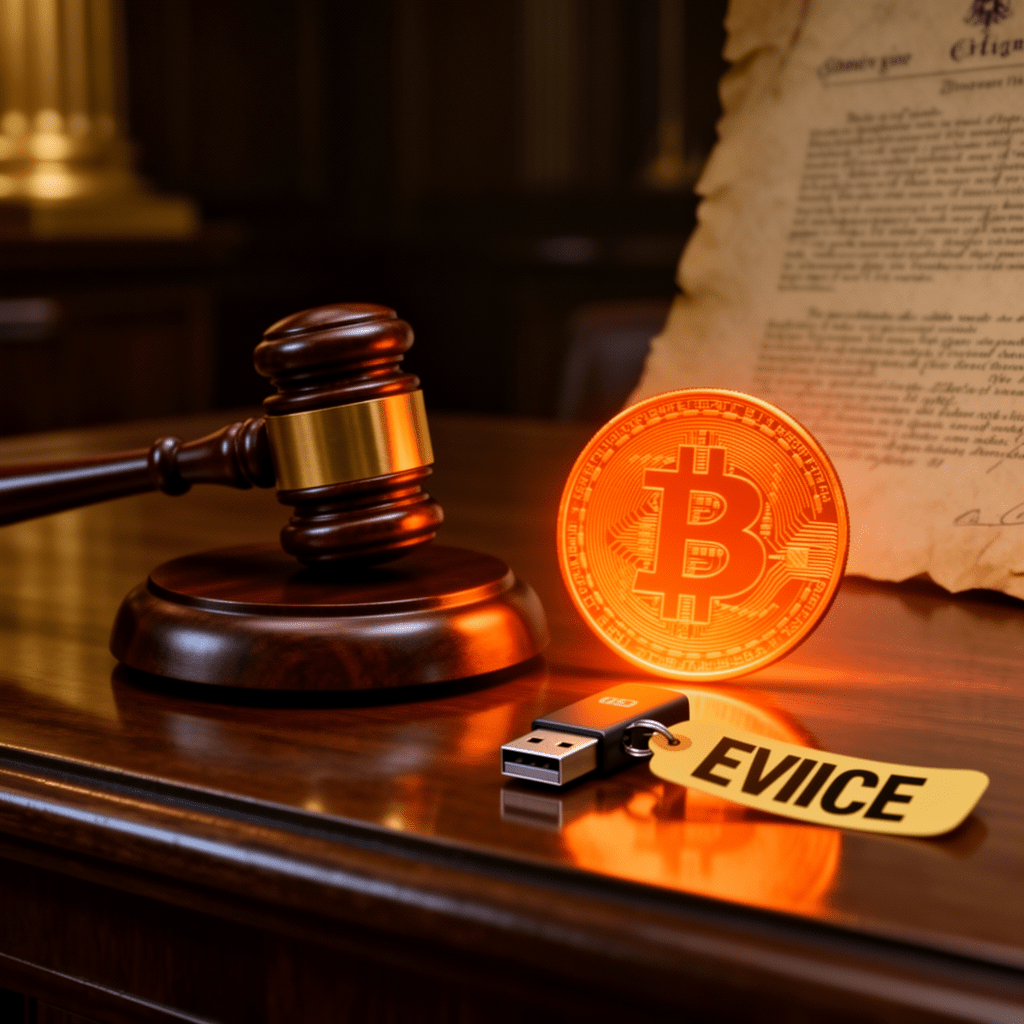

Quick Summary
- A New York lawsuit seeks to legally claim 3.7 million Bitcoin from 39,069 dormant wallets — including ~1.09 million BTC linked to Satoshi Nakamoto
- The plaintiffs — a pseudonymous individual called "Noah Doe" plus two Wyoming LLCs — argue the coins are "abandoned property" under New York law because the wallets haven’t moved in 6+ years
- The Bitcoin Policy Institute (BPI) filed to intervene as a defendant TODAY — July 11, 2026 — to block the seizure
- Next court hearing is July 14, 2026 — Monday, three days from now
- If the court accepts this legal theory, every self-custodied Bitcoin wallet could be vulnerable
You think your Bitcoin is safe because you hold your own keys? Think again.
A New York court is about to decide whether 15 years of inactivity means you lose your claim to your coins. And the lawsuit doesn’t just target Satoshi’s stash. The legal theory could apply to your wallet too.
What Happened
In late May 2026, a pseudonymous plaintiff calling himself "Noah Doe" — reportedly a former Salomon Brothers client — filed a lawsuit in New York County Supreme Court. Along with two Wyoming LLCs, he asked the court to declare that he legally owns the contents of 39,069 Bitcoin wallets that haven’t moved in over six years.
The total haul: 3.7 million Bitcoin. At today’s prices, that’s roughly $240 billion.
Among those wallets: approximately 1.09 million BTC that blockchain forensic researchers have attributed to Satoshi Nakamoto — the creator of Bitcoin. That’s about $84 billion worth of Satoshi’s untouched coins.
The legal theory? New York’s abandoned property law. The plaintiffs argue that because these wallets have been dormant for 6+ years, the contents should be treated as "lost property" — and they should get it.
They don’t claim to have the private keys. They want a declaratory judgment saying the Bitcoin belongs to them, which would — in theory — give them a legal claim they could enforce against anyone who spends those coins.
On July 11, 2026, the Bitcoin Policy Institute stepped in. BPI filed a motion to intervene as a defendant and to dismiss the case entirely.
Their argument: Inactivity is not abandonment. Millions of Bitcoiners intentionally self-custody their coins for years without moving them. If the court accepts this "you didn’t move your coins, so they’re not yours" logic, it threatens the entire concept of self-custody.
Why This Matters for Bitcoin
This is the most dangerous legal precedent Bitcoin has ever faced — and most Bitcoiners don’t even know about it.
The "abandoned property" theory is a direct attack on self-custody.
Think about it. If the court rules that 6+ years of inactivity means you lose ownership of your coins, what happens when a government agency decides your coins are also "abandoned"? You hold your Bitcoin for a decade without touching it — the way every Bitcoiner is taught to do — and suddenly the state says "sorry, you should have been using it."
This isn’t about Satoshi. Satoshi’s coins have been untouched since 2011. But thousands of ordinary Bitcoiners — people who listened to "hold, don’t sell, self-custody" — also have wallets that haven’t moved in 6+ years. Are they next?
The lawsuit also exposes a deeper truth: the legal system does not understand Bitcoin. It treats a public address like a bank account number. It treats inactivity like abandonment. It treats a decentralized, permissionless network like New York property law.
That’s not how Bitcoin works. And if the courts get this wrong, the consequences go far beyond Satoshi’s 1 million coins.
The Love Is Bitcoin Takeaway
Here’s the uncomfortable truth: You don’t actually own your Bitcoin if a court can decide otherwise.
The whole point of self-custody is that no government, no bank, no plaintiff can touch your coins. The private keys prove ownership. The network doesn’t care about New York law.
But that doesn’t stop the legal system from trying. And the legal system has something Bitcoin doesn’t: police, guns, and the power to enforce its judgments.
A declaratory judgment saying "these coins belong to Noah Doe" won’t move a single sat — the plaintiff doesn’t have the keys. But it would create a legal claim that could be used to go after anyone who spends those coins. It would harass exchanges, freeze transactions, and create enough legal chaos that the owners of those wallets — including Satoshi — effectively lose their property through litigation, even if the underlying blockchain never changes.
This is the war that’s coming. Not against Bitcoin the technology — that can’t be stopped. But against the people who hold it. Against the idea that you can opt out of the system entirely. Against the concept that inactivity is a feature, not a flaw.
If you hold your own keys, you are already a target.
What Beginners Should Do Next
- Understand the difference between a Bitcoin address and ownership. Your coins are safe on the blockchain. Your legal claim to them is a different question entirely.
- Don’t panic. This lawsuit won’t change the protocol. Your keys still control your coins. But it’s a warning about what happens when the legal system catches up to self-custody.
- Pay attention to the July 14 hearing. The outcome will tell you how seriously courts take the concept of on-chain ownership.
- Get educated. The best defense against legal overreach is understanding exactly how Bitcoin works — so no court can tell you "inactivity means abandonment" without you knowing they’re wrong.
FAQ
Can the court actually seize Satoshi’s Bitcoin?
No court can move Bitcoin on the blockchain without the private keys. But a declaratory judgment could create legal claims against anyone who spends those coins — effectively making them "radioactive" and unspendable through regulated channels.
Could this apply to my wallet?
If you’ve self-custodied Bitcoin for 6+ years without moving it, the same "abandoned property" legal theory could theoretically apply. The BPI was created specifically to fight this precedent.
Is this good for Bitcoin adoption?
No. Lawsuits like this create legal uncertainty around self-custody. But they also expose why Bitcoin exists in the first place — a system where no court can freeze or seize your assets without your keys.
What happens at the July 14 hearing?
The court will hear BPI’s motion to dismiss and consider amicus briefs from groups like The Digital Chamber. A dismissal would be a major win. A denial means the case proceeds — and the legal assault on self-custody continues.
Is this financial advice?
Hell no. This is a warning. Read it, understand it, and decide for yourself what to do. Not your keys, not your coins. But also: not your court, not your problem — until it is.
Final Thoughts
The Noah Doe lawsuit is a shot across the bow of every Bitcoiner who thinks self-custody means total safety. Your coins are safe on the blockchain. Your legal claim to them? That fight is just beginning.
The hearing is Monday. The outcome will tell you everything about whether the legal system sees Bitcoin as property you can own — or as lost treasure anyone can claim.
If a court can take Satoshi’s Bitcoin‘s Bitcoin, what makes you think yours is safe?
Use coupon code LOVEISBITCOIN at loveisbitcoin.com/bull for exclusive deals on self-custody tools.
This article is for education only and is not financial advice.