
Quick Summary
- More than 50% of Bitcoin’s circulating supply is now “underwater” — meaning those coins last moved at a higher price than today’s market
- This level of unrealized loss has historically coincided with bear market bottoms (late 2018, March 2020, 2022 bear market)
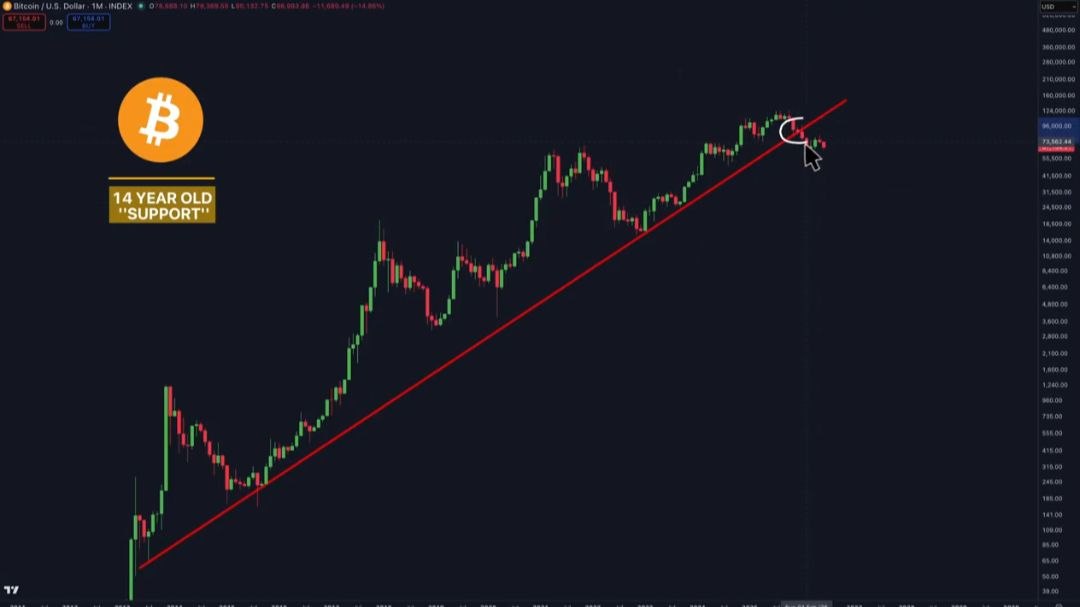
- Bitcoin is trading around $60K–$62K, down ~50% from its all-time high of $124K
- ETF outflows have exceeded $7 billion over the past five weeks, mostly retail-driven
- Long-term holders are NOT selling — the capitulation is coming from short-term speculators
You’re Not Imagining It — The Pain Is Real
Let’s cut the bullshit. If you bought Bitcoin in the last six months, you’re probably looking at red numbers right now. And guess what? You’re not alone — you’re in the majority.
Bitcoin Magazine dropped a chart yesterday that should make every paper-handed speculator stop and think: more than half of all Bitcoin is currently held at a loss. Over 50% of the circulating supply is “underwater” — the coins last moved at a price higher than today’s ~$61K market.
That’s roughly 10.5 million Bitcoin sitting in wallets that would show a loss if sold today.
The news triggered the usual chaos on X. Some called it a death cross. Others called it the bottom. Both sides can’t be right — but history has a pretty clear answer about what happens next.
What “Underwater” Actually Means
On-chain analysts track something called the “percent supply in profit” — the share of Bitcoin that last moved at a price below the current market price. When that number drops below 50%, it means the majority of holders are sitting on unrealized losses.
This isn’t a theoretical metric. It measures actual human behavior: every Bitcoin has a last-move price (the price it was when it last changed wallets). When the current price drops below that cost basis, that coin is “in loss.”
Right now, loss outweighs profit for the first time this entire cycle.
History Says This Is the Bottom — But It Doesn’t Have to Be
Here’s where it gets interesting. The same signal has flashed before every major Bitcoin bottom:
- Late 2018 — 50%+ supply underwater → bear market bottom → 2019 recovery rally
- March 2020 — COVID crash, same signal → biggest bull run in history followed
- November 2022 — FTX collapse, same signal → Bitcoin at $16K → next ATH at $124K
Every single time the majority of holders were underwater, it marked the zone where smart money accumulated and weak hands finally gave up.
But here’s the uncomfortable truth: the metric can stay elevated for months. In 2022, Bitcoin spent weeks with >50% supply in loss before the real bottom. This isn’t a buy-now-or-miss-out signal — it’s a “stop panic-selling and think clearly” signal.
Who’s Selling and Who’s HODLing
The most important data point buried in this news: long-term holders (1 year+) are barely selling. The selling pressure driving this drawdown is coming from short-term speculators and ETF traders.
Meanwhile, corporate treasuries bought 2,398 BTC in a single recent week with zero corporate selling. Michael Saylor is still buying. The people who understand Bitcoin best are using this dip to accumulate — not run for the exits.
The ETF Outflow Panic Is a Distraction
Spot Bitcoin ETFs have hemorrhaged $1.42 billion in the last 11 days and over $7 billion in five weeks. That sounds terrifying — until you realize ETFs are the most paper-handed form of Bitcoin exposure. ETF buyers are not HODLers. They’re traders who bought an IOU through a brokerage, not someone who learned how a seed phrase works.
Every ETF outflow is a transfer of Bitcoin from people who didn’t understand what they owned to people who do. That’s not a crash — that’s a purification.
The Love Is Bitcoin Takeaway
When 50% of holders are underwater, you’re not early, you’re not late — you’re in the exact same position as everyone who made life-changing money in every previous cycle. The people who panic-sold at these levels in 2018, 2020, and 2022 all regret it. The people who bought more don’t.
Bitcoin is $60K after being $124K. That’s a 50% drawdown. That’s a bear market by any definition. But Bitcoin has survived 14 years of these, and every single one ended higher than the last.
The question isn’t “is this the bottom?” The question is: do you understand what you own well enough to hold through the pain?
If you don’t, the pain will win and you’ll sell at the worst possible moment. If you do, this is just another entry in a long history of buying opportunities that felt terrifying in real time.
Not your keys, not your coins. Not your understanding, not your conviction.
What Beginners Should Do Next
- Learn the difference between on-chain metrics and price action
- Understand why “supply in profit” is a more useful metric than “price prediction”
- Study past bear market bottoms — the pattern is clearer than you think
- If you’re panicking, zoom out to the 1-year chart
- Never invest more than you can afford to lose
FAQ
Is Bitcoin going to zero?
Bitcoin has survived 14 years, multiple 80% drawdowns, government bans, exchange hacks, and every “death” narrative imaginable. Every single time, it has recovered to new highs. The probability of zero is zero.
Should I sell now to avoid more losses?
This is not financial advice, but history shows that selling when 50% of holders are already underwater is the exact opposite of what has worked in every previous cycle.
Is this different from previous bear markets?
The macro environment is different (high interest rates, strong dollar, AI capital rotation), but the on-chain signature is identical. Bitcoin’s supply dynamics haven’t changed — still 21 million, still disinflationary.
How is this different from 2022?
In 2022, the entire crypto ecosystem was imploding (FTX, Terra, Celsius, 3AC). Today, the infrastructure is more mature, ETF products exist, and corporate adoption is expanding. The pain is price-driven, not structural.
Does the CLARITY Act change anything?
The July 17 CLARITY Act hearing is the biggest regulatory catalyst on the horizon. Positive regulation could unlock massive institutional demand that ETFs alone haven’t captured.
Final Thoughts
Half the market is bleeding. History says that’s the setup, not the punchline. Whether you stack sats or sell in panic depends on one thing: whether you actually understand what you own.
This article is for education only and is not financial advice.