
Quick Summary
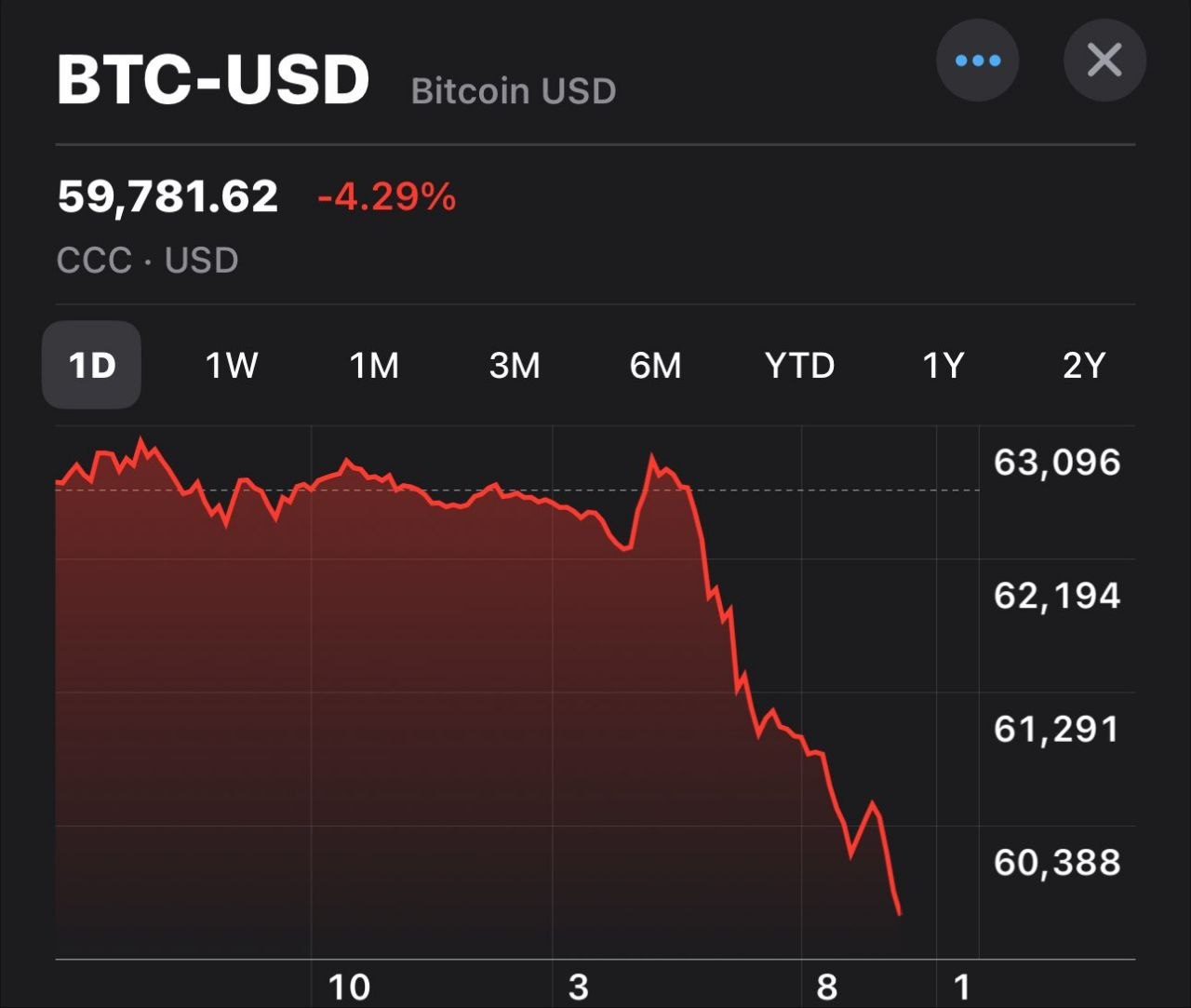
- Bitcoin hit a new yearly low near $58,400 on June 26, 2026 — the weakest price since September 2024
- Over $1 billion in liquidations hit the market in 24 hours, most of them long positions
- Spot Bitcoin ETFs saw nearly $700 million in outflows in a single day
- Fear & Greed Index plunged to 13 — “Extreme Fear” territory
- Long-term holders are buying the dip while short-term traders are panic-selling
What Happened
Bitcoin did what Bitcoin has always done: it crashed.
The price touched $58,400 on June 26, breaking below the psychologically important $60,000 level for the first time in nearly two years. The move came amid a broader risk-off wave driven by hawkish Fed commentary, sticky inflation data, and a general rot in tech and semiconductor stocks.
But here’s what actually moved the needle: liquidations. Over $1 billion in leveraged positions were wiped out in 24 hours. That’s not selling pressure from people who believe in Bitcoin — that’s speculators getting margin-called into oblivion.
The ETF outflows make great headlines (“$700 million fled Bitcoin!”) but they tell a different story: institutions that bought at $70K+ are panic-selling to lock in losses. Meanwhile, wallet activity shows that addresses holding Bitcoin for over 3 years are — surprise — not selling.
Why This Matters for Bitcoin
Every Bitcoin cycle follows the same script:
- Price goes up too fast.
- Leverage builds up.
- Leverage gets flushed.
- Mainstream media declares Bitcoin dead.
- Long-term holders accumulate.
- The cycle repeats.
We are at step 3–4 right now. The “Bitcoin is dead” obituaries are being written as we speak. Prediction markets are pricing in $45,000. Analysts on CNBC are telling you to “be cautious.”
This is the most predictable part of the Bitcoin cycle. And it’s also the most profitable — if you have the stomach for it.
The Love Is Bitcoin Takeaway
Here’s what nobody on CNBC will tell you: the price falling is not the story. The story is who sells and who buys.
The people selling right now are the same people who bought at $75K with leverage, who chased ETFs because their advisor told them to, who never learned the difference between a Bitcoin wallet and a brokerage account.
The people buying are the ones who know self-custody. The ones who hold their own keys. The ones who understand that a 30% drawdown in Bitcoin is just a Tuesday.
Is this scary? Yes. Is it the end? We’ve seen this movie at least four times before. Bitcoin always survives every major crash because the network doesn’t care what the price is today. The blocks keep coming. The hash rate keeps climbing. The supply stays capped at 21 million.
Learn how Bitcoin wallets work if you want to actually hold your own coins through moments like this. Compare Bitcoin ETFs with real Bitcoin — they are not the same thing.
If you want to sell your coins to someone who’s been stacking sats since 2020, go ahead. They’ll thank you in 2028.
What Beginners Should Do Next
- Don’t make decisions based on headlines. The media is paid by attention, not accuracy.
- Learn the difference between Bitcoin and crypto. Most of the “crypto market” is speculative garbage that has nothing to do with Bitcoin.
- Understand custodial vs non-custodial wallets. If you don’t hold the keys, you don’t hold the Bitcoin — even if you’re in an ETF.
- Learn how Bitcoin withdrawals work. An exchange is not a wallet.
- Start with education before chasing price action. The worst time to learn about Bitcoin is during a panic.
FAQ
Why did Bitcoin crash to $58K?
A combination of hawkish Fed policy, leveraged liquidation cascades, and ETF outflows created a selling storm. There was no single “event” — just the market finding weak hands and shaking them out.
Is this the bottom?
Nobody knows. Some analysts point to $45K–$55K as possible further downside based on historical cycle patterns. Others argue that $58K is a generational buying opportunity. The honest answer: the bottom is only visible in hindsight.
Should I sell my Bitcoin?
This is not financial advice. But historically, selling during extreme fear (Fear & Greed at 13) has been a terrible strategy. The best returns come from buying when there’s blood in the streets.
Is this the end of Bitcoin?
Bitcoin has been declared dead over 400 times. It has survived every single bear market, regulatory attack, exchange collapse, and global crisis. A 30% drawdown is a Tuesday in Bitcoin years.
What is self-custody?
Self-custody means holding your own Bitcoin in a wallet where only you have the private keys. Not an exchange. Not an ETF. Not your broker. Just you.
Should beginners use a brokerage or a Bitcoin wallet?
Both. Buy Bitcoin through a regulated exchange if that’s easiest. Then learn how to withdraw it to a wallet. The goal is to graduate from buying to holding.
Is a Bitcoin ETF the same as owning Bitcoin?
No. An ETF is a paper representation. You don’t hold the keys. You can’t spend it. You can’t verify it on-chain. It’s a bet on the price, not ownership.
Is this financial advice?
No. This article is for education only. Every financial decision is yours alone. Do your own research.
Final Thoughts
Bitcoin is at $58,000. The world is panicking. The “experts” are bearish. The headlines are screaming.
And long-term holders are buying.
Ask yourself: in five years, will you be glad you panic-sold here? Or will you wish you had bought more?
If you don’t understand self-custody, now is the time to learn. Not when the price is pumping. Now.
When billionaires sell and declare Bitcoin a “failed hedge,” it makes headlines. But history shows that selling at the bottom is the real crime.
This article is for education only and is not financial advice.