
They Watched Her Feed The Machine
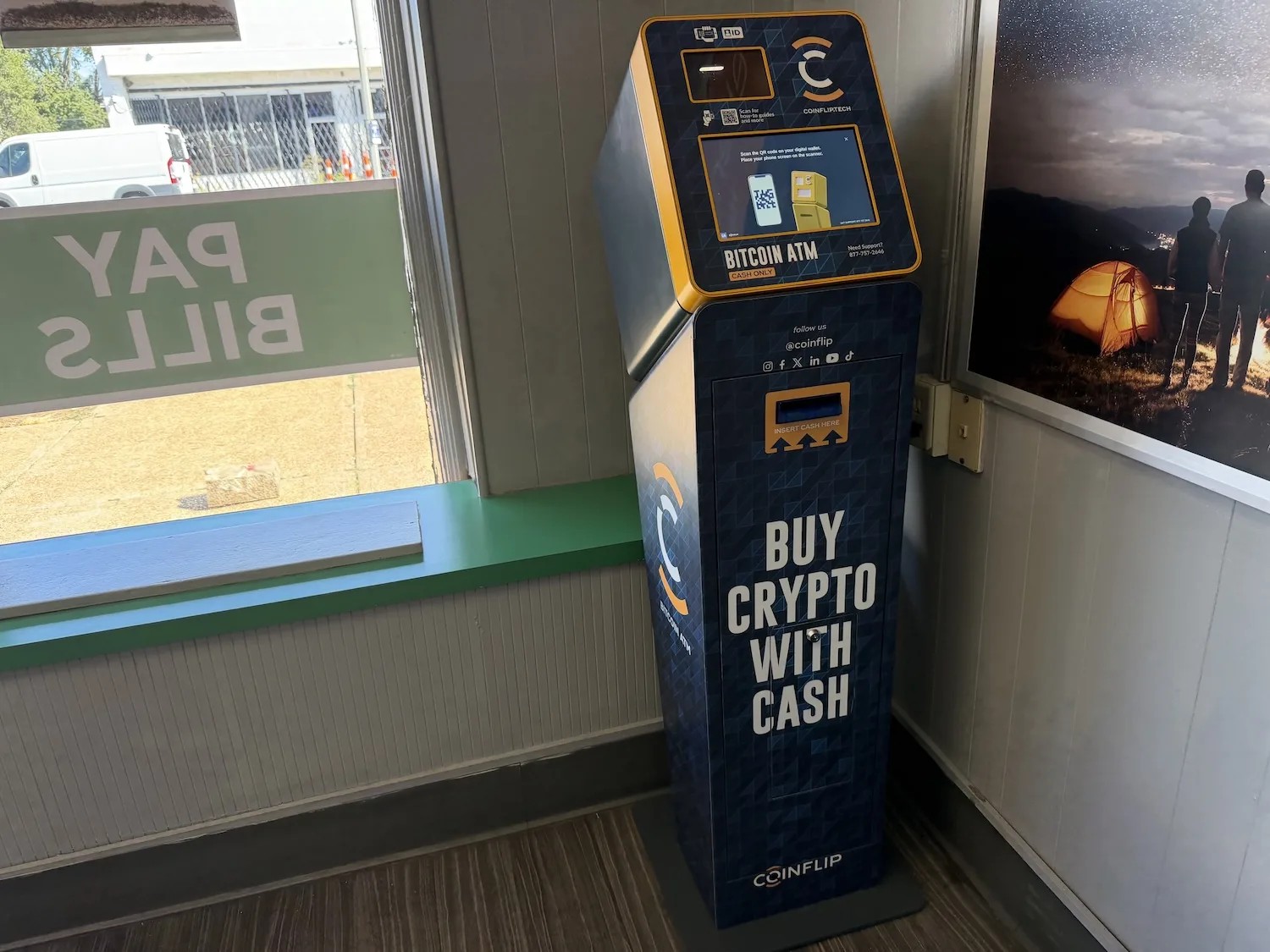
A woman in her seventies stood at a Bitcoin ATM inside a Hucks gas station in Lake St. Louis, phone pressed to her ear, convinced she was on a call with Microsoft.
The gas station attendants had already tried to stop her. They called the police. The police station is across the street, so officers were there in minutes. They told her, to her face, that she was being robbed.
She kept feeding bills into the machine anyway.
When she finally stopped, roughly $45,000 was gone. The scammers were somewhere overseas. The money had moved through a machine in a Missouri gas station in seconds, and it was never coming back.
That is not an outlier. That is the business model.
What The Attorney General Found
Missouri Attorney General Catherine Hanaway calls crypto ATMs "the modern getaway car for fraudsters." She is not being poetic.
"It’s just a box where they’re collecting money," she says. Her office conservatively estimates $7 million has disappeared into these machines in Missouri alone.
Her office sued CoinFlip in May under the Missouri Merchandising Practices Act, accusing the company of failing to protect customers and of charging usurious fees. There are around 140 CoinFlip machines in the state. The lawsuit lays out the pattern:
- A single mother in Jefferson County was told she had two warrants out for missing jury duty. She deposited $1,000 into a CoinFlip machine at a vape shop. CoinFlip refunded only the fees. She was still out more than $800. The fee on her transaction was 18 percent.
- A woman in Boone County was told the same thing about a missed court date. She deposited $900 and realized she was being scammed the moment the cash left her hand.
- An elderly man in St. Charles County put more than $180,000 into a CoinFlip machine. He sold his car and drained his real investment accounts because he believed he was investing. He was not investing. He was funding a crime.
- The woman in her seventies at the Lake St. Louis Hucks: about $45,000.
Vape shops. Gas stations. Liquor stores. That is where these machines live, and that is not an accident. Hanaway’s office has chased illegal gambling machines and kratom derivatives out of the same aisles.
"Once The Money Goes Into The Machine, It Is Their Money"
Here is the part that should end this industry.
In the Lake St. Louis case, police finally got a search warrant to open the machine and seize the cash that had not yet been moved. Prosecuting attorney Joe McCulloch’s office is holding that money as evidence so it can go back to the victim.
CoinFlip hired a New York law firm that contacted his office claiming ownership of it.
"They’re claiming that once the money goes into the machine, that it is their money," McCulloch says. "No matter the circumstances."
Let that sit. A woman was robbed in front of witnesses, police recovered part of the loss, and the company that owns the box says the cash belongs to it.
The Defense: We Wrote The Rules, So We Can’t Break Them
CoinFlip’s answer is a motion to dismiss. The company argues that Missouri’s legislature already passed the Virtual Currency Kiosk Consumer Protection Act, which regulated crypto kiosks as of August 2025, and that general consumer protection law "cannot be reconciled with" industry-specific legislation. It also argues the Attorney General needed approval from the state’s Division of Finance before filing suit, and did not get it.
The company says it demanded that law, worked for mandatory licensure and stronger compliance standards, and compares its kiosks to the currency exchanges at airports. It says more than half a million people use CoinFlip because they want to buy crypto with cash, quickly and in person. It wants the case moved out of Jasper County, which has been hit hard by these scams. No hearing is set yet.
Read that again: the industry pushed for the rules, then argues the rules it wrote are the reason it cannot be held responsible for what happens inside its own machines. That is not regulation. That is a permission slip.
Hanaway’s counterpoint is simpler. "We can’t figure out what good they’re doing," she says. "A regular ATM is a service. If I need some cash, I can go to one and I can get some. If I go to this, I get a number. I can’t spend it. I can’t do anything with it. There’s no need for these. We think their whole enterprise is false advertising."
The Love Is Bitcoin Takeaway
Bitcoin ATMs are not Bitcoin. They are custodial middlemen with a cash slot, a 15-to-20 percent spread, and a compliance department that files paperwork after your grandmother’s money is already gone.
The machine does not give you Bitcoin. It gives you a number on someone else’s server, bought at a brutal markup, sent wherever the person on the phone tells you to send it. Every single thing that makes these scams possible is the opposite of what Bitcoin is for.
Real Bitcoin is not a box in a vape shop. It is keys you hold. It is a wallet on your own device. It is you checking the address before you send anything, and knowing that no legitimate agency, bank, or company will ever call you and demand crypto to "fix a warrant," "unlock an account," or "protect your money." Not one. Ever.
If you want to actually buy Bitcoin, buy it from somewhere that does not custody your coins and does not need a gas station to do business. Bull Bitcoin is non-custodial, you keep your keys, and you can use our coupon LOVEISBITCOIN at https://loveisbitcoin.com/bull.
This is also why the media keeps blaming Bitcoin for crimes committed with a kiosk, and why the fix is education instead of a bigger fee: learn how Bitcoin wallets actually work before you put a single dollar into any machine with a screen on it.
And remember the graveyard. A retired couple who lost $76,000 to Bitcoin Depot ATMs is suing, and Bitcoin Depot itself filed Chapter 11 and shut down thousands of machines. The middlemen keep failing. Bitcoin keeps working.
So Whose Bitcoin Is It?
When a company tells a prosecutor that the cash a scammed woman fed into its machine – while police stood next to her begging her to stop – legally belongs to the company, what exactly did she buy?
This article is for education only and is not financial advice. Photo: Ryan Krull / St. Louis Magazine.
THEY CALL IT A BITCOIN ATM. A 70-YEAR-OLD FED $45,000 INTO IT WHILE POLICE BEGGED HER TO STOP - AND THE COMPANY SAYS THE MONEY IS THEIRS