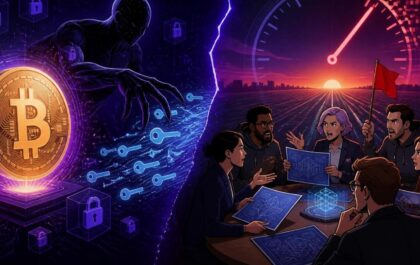
You pay rent every time you move bitcoin between Lightning and the base chain — a submarine swap — and you pay it to a cartel. Lightning Labs’ Loop. Boltz. A handful of companies that set the fee, pocket the difference, and enjoy a walled market because nobody ever cracked discovery.
That cartel just got crashed.
This week supertestnet — the freelance Bitcoin dev responsible for some of the most stubbornly useful experiments in this space — shipped swap-service: an open orderbook for submarine swaps that runs on Nostr. No company. No permission. No app-store approval.
The mechanics are absurdly simple. Run an LND node? You can now become a "yield chaser": set how many sats you are willing to swap, what fee you will charge, and publish your offer to an orderbook that anyone on Nostr can read. Someone who needs a swap browses the book, picks your offer, pays your fee. You earn yield on bitcoin that was sitting idle. They get a swap priced by the market — not by a monopoly.
Supertestnet’s own pitch says it plainly: with enough participants, swap costs could be driven down close to zero.
Close. To. Zero.
Let that sink in. The most permissionless money on Earth still needed a permissioned middleman layer just to move funds between its own networks — until some dev put the offer book on a public relay feed. That is the history of Bitcoin in one sentence: every time the establishment builds a toll booth, a pleb builds a road around it.
If you still do not get why Lightning itself matters, start with the basics here. And the future of the network is exactly the kind of thing these swap markets now make possible.
Meanwhile the fiat world keeps building its own toll booths on your money — and those you can never price-shop your way out of. The one toll worth paying is the one-time swap out of the bank system forever. Coupon code LOVEISBITCOIN at loveisbitcoin.com/bull.
Submarine swaps used to be the one corner of Bitcoin where you had to trust a company. Now the offer book is a public feed and the liquidity can come from your neighbor’s node. If swap fees really collapse toward zero — which toll booth gets knocked down next?