
YOU keep hearing the same thing from Wall Street: Bitcoin is dead, it’s a bubble, it’s gonna zero. And while they were saying it, the people actually betting against it just forfeited $282 million in a single day. That’s the price of being spectacularly, publicly wrong.
And now the Treasury is about to do the one thing that makes them even more wrong — revving up a nearly trillion-dollar printer to "save" the bond market. Your savings are the fuel. Your dollar is the casualty.
The Facts
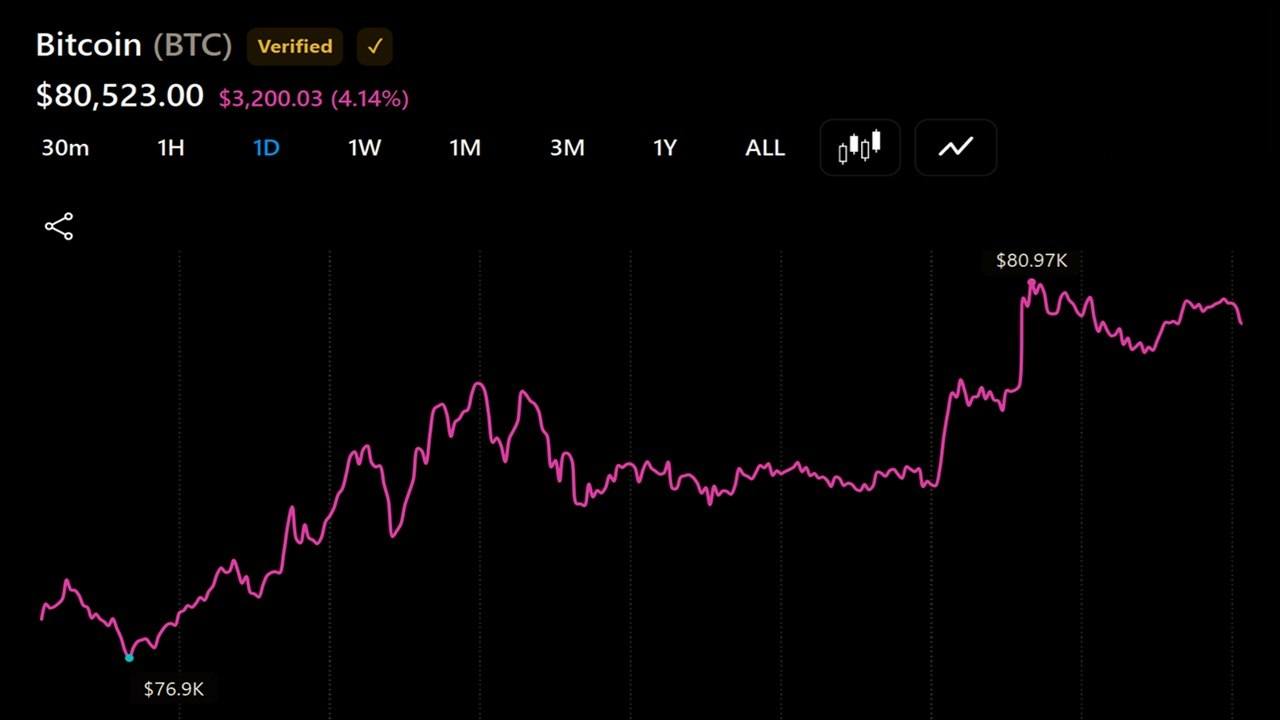
Bitcoin surged past $81,000, peaking at $81,255 on Bitstamp late Sunday night before consolidating above $80,500 — a swing of more than 4% that lifted its market cap to nearly $1.62 trillion and snapped its year-to-date losses down to just 8%.
The liquidation data is brutal. Coinglass recorded $177 million in short bets wiped out in four hours — versus just $4.5 million in long liquidations. Over 24 hours, short sellers lost $282 million total, representing 62% of every short position liquidated across the entire cryptocurrency market.
What lit the fuse? Reports that the US Treasury is considering tapping its roughly $950 billion General Account to fund bond buybacks. The 10-year yield immediately dropped. A trader who shorted Bitcoin this week is now praying the Treasury’s "rescue plan" somehow rescues his margin account. It won’t.
Even Stanley Druckenmiller — one of the most respected macro investors alive — has publicly warned Treasury Secretary Scott Bessent that capping yields risks market trust. And Arthur Hayes is already calling Treasury buybacks the start of a "new Bitcoin bull run." When the bond guys are scared and the crypto guys are celebrating, pay attention to who’s laughing.
Why This Is Your Problem
Here’s the part nobody on CNBC will say out loud.
Wall Street’s response to getting short-circuited isn’t humility — it’s a rescue. The same institutions that laughed at Bitcoin for years now want the Treasury to prop up the bond market using nearly $1 trillion of the government’s General Account. Every dollar spent "stabilizing" yields is purchasing power debased out of your wallet. It’s not their money. It’s yours. They just control the printer.
And where are you in this trade? You’re the one paying inflated prices while the people who were wrong just got a bailout narrative. The banks that blocked your Bitcoin transfers, the funds that shorted it, the pundits who called it a bubble — they all want you to keep trusting a machine that’s one policy meeting away from a trillion-dollar money move. Druckenmiller, the guy who has navigated more macro cycles than almost anyone, is warning in public that yield capping erodes trust in the system. If the smartest bond traders in the world are scared, why are you still comfortable keeping your wealth in their system?
The Love Is Bitcoin Takeaway
This is why self-custody matters. Not as ideology — as arithmetic.
Bitcoin doesn’t need a bailout. It doesn’t need a General Account tap. It doesn’t need a Treasury Secretary to reassure you. It has a hard cap of 21 million and it does not care what the government decides to do with your bond yields. The short sellers just learned that lesson for $282 million. You get to learn it for free.
You don’t have to ride Wall Street’s liquidations, and you don’t have to pray for a Treasury printer to save your purchasing power. You own your coins — actually own them, keys in your hand, no middleman. That’s the entire game. When institutions are this desperate, being your own bank is the only side of the table that isn’t rigged.
If you’re serious about holding your own stack, there’s a deal worth checking out — head to loveisbitcoin.com/bull and use coupon code LOVEISBITCOIN to get the hardware you need to never have to ask permission to hold your own money.
The Wall Street traders who shorted Bitcoin just found out the hard way that the asset doesn’t care about their thesis. The Treasury is preparing to spend your purchasing power on a rescue. So the real question is simple:
If the people betting against Bitcoin are losing millions in a day, and the people "saving" you are sitting on a trillion-dollar printer — which side of that table do you want your retirement on?
This article is for education only and is not financial advice.